
SAP Business One Modules & Capabilities
SAP Business One is rated across 13 of 14 ERP modules, 2 of them a core strength and 132 documented capabilities catalogued across those modules.
- 13of 14
- Modules rated
- 2
- Core strengths
- 132
- Documented capabilities
- Cloud / On-Premise
- Deployment
SAP Business One module ratings
Ordered strongest to weakest. Each rating reflects standard-edition depth, not what a third-party add-on could bolt on.
Finance & Accounting
strongCore financial management including general ledger, accounts payable/receivable, fixed assets, cash management, and financial reporting. The backbone of any ERP system.
›41 documented capabilities in 1 areas
Finance & Accounting
strong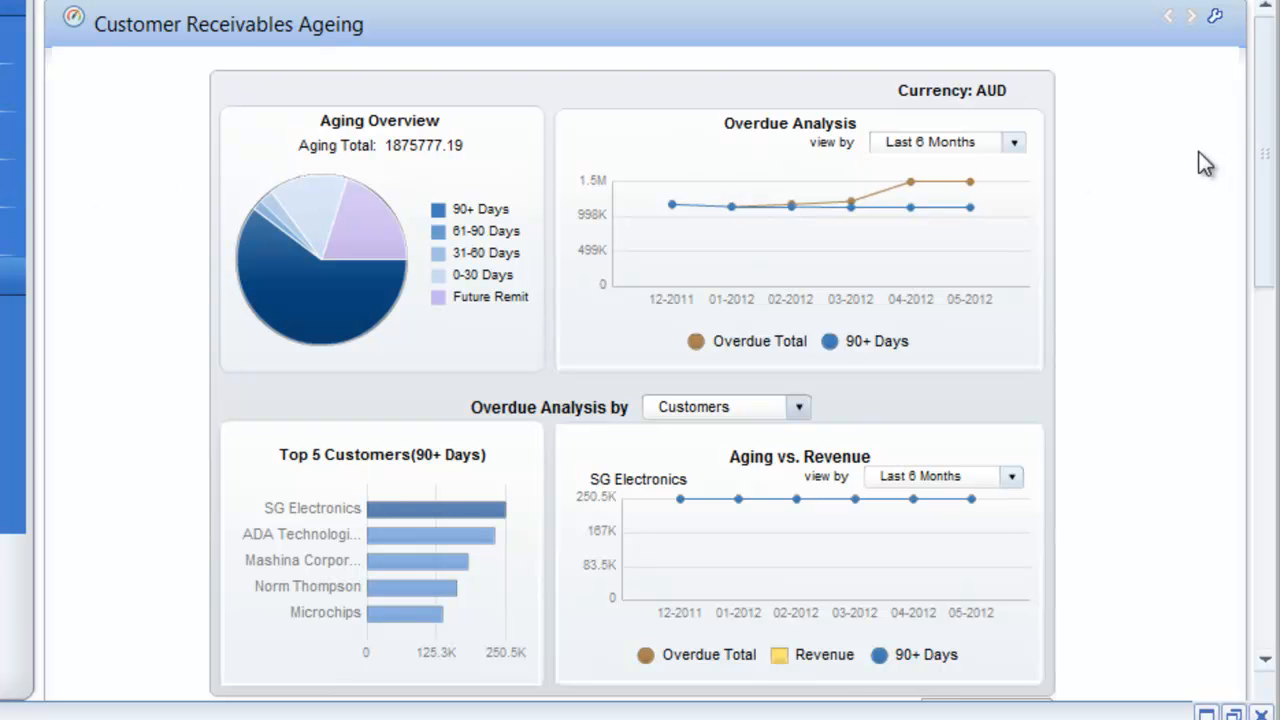
Other capabilities41
Inventory Management
strongInventory tracking, stock management, reorder point planning, multi-location management, and inventory valuation across warehouses and locations.
›11 documented capabilities in 1 areas
Inventory Management
strong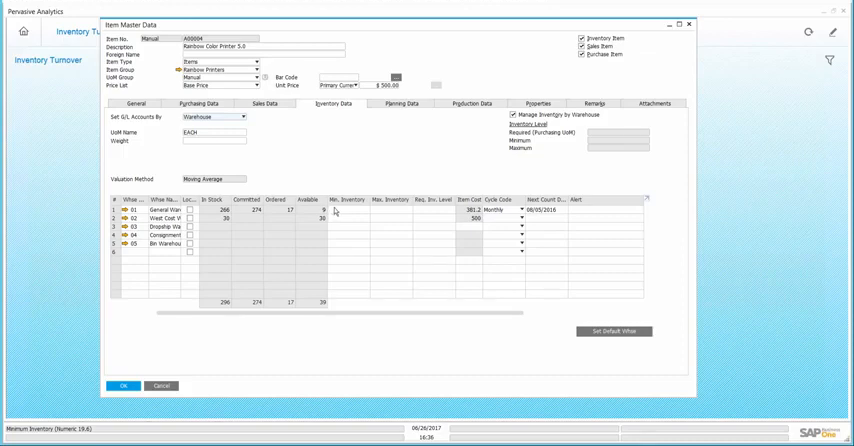
Other capabilities11
Manufacturing
moderateProduction planning, shop floor control, BOM management, MRP, and manufacturing execution. Supports discrete, process, and mixed-mode manufacturing environments.
›13 documented capabilities in 1 areas
Manufacturing
moderate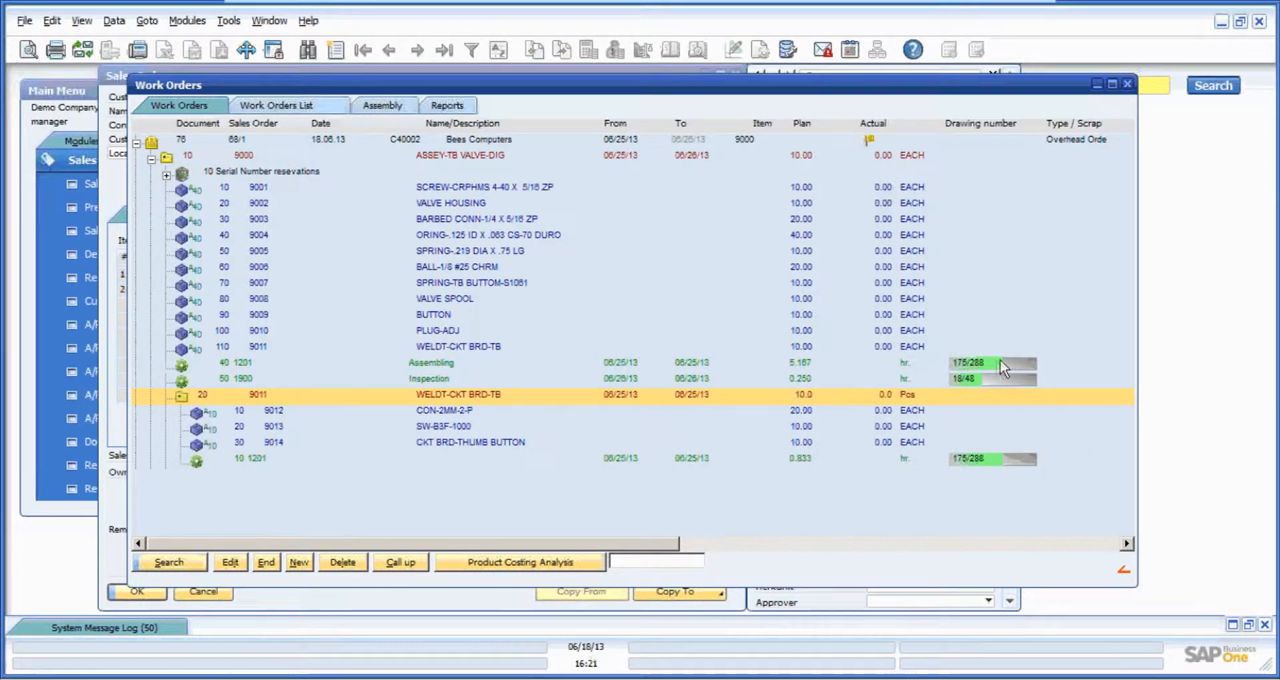
Other capabilities13
Supply Chain
moderateEnd-to-end supply chain visibility including demand planning, supply planning, logistics, supplier management, and supply chain analytics.
Sales
moderateThe sales side of an ERP: quotes and pricing, order processing, customer and account management, post-sale service, and sales reporting on shared master data.
›21 documented capabilities in 1 areas
Sales
moderate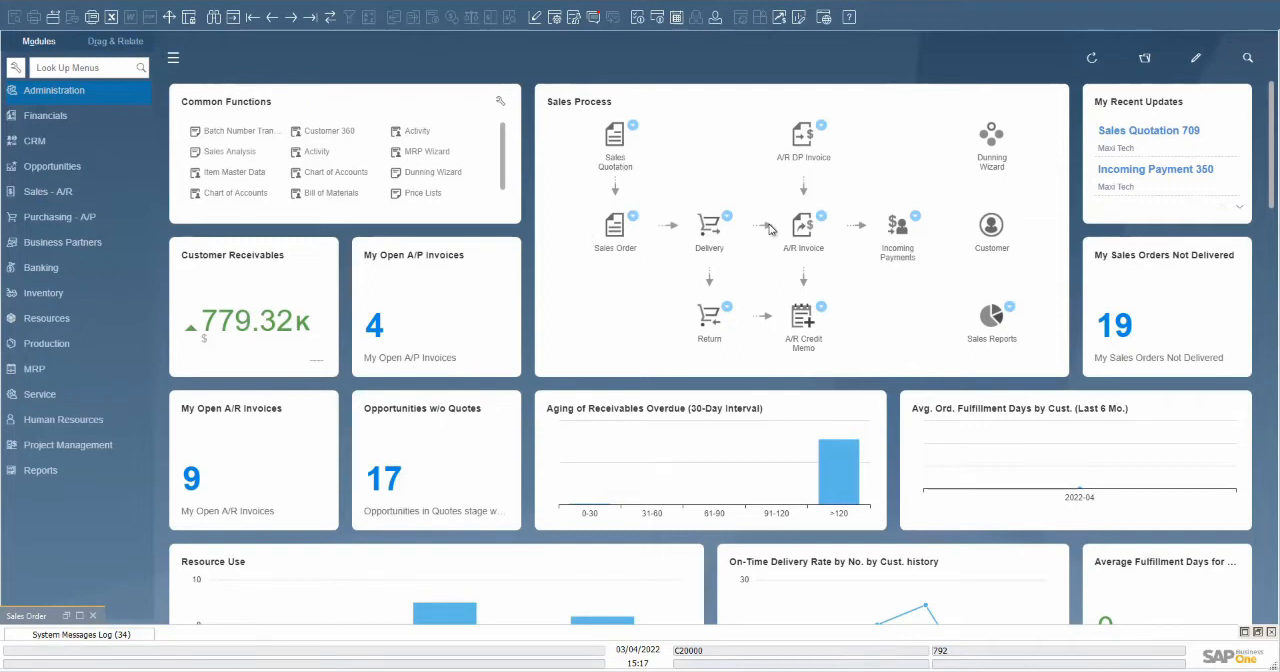
Other capabilities21
Procurement
moderatePurchase order management, supplier management, requisition workflows, contract management, and spend analytics.
›16 documented capabilities in 1 areas
Procurement
moderate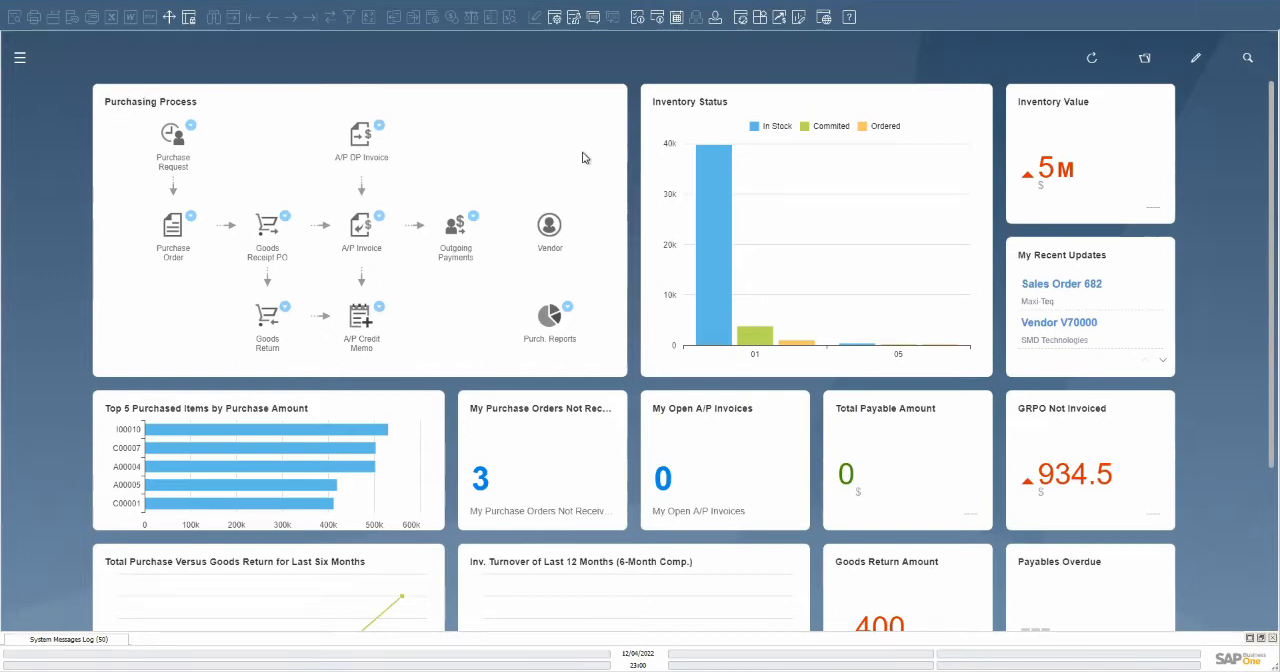
Other capabilities16
Warehouse Management
moderateWarehouse operations including receiving, putaway, picking, packing, shipping, and warehouse layout optimisation.
›4 documented capabilities in 1 areas
Warehouse Management
moderateOther capabilities4
Business Intelligence
moderateReporting, dashboards, analytics, and data visualisation capabilities built into the ERP platform for operational and strategic decision-making.
›19 documented capabilities in 1 areas
Business Intelligence
moderateOther capabilities19
HR & Payroll
basicHuman resources management including employee records, payroll processing, benefits administration, time and attendance, and talent management.
›4 documented capabilities in 1 areas
HR & Payroll
basicOther capabilities4
Project Management
basicProject planning, resource allocation, time tracking, expense management, and project accounting for project-centric businesses.
›3 documented capabilities in 1 areas
Project Management
basicOther capabilities3
Ecommerce
basicIntegrated ecommerce and online storefront capabilities including B2B and B2C portals, product catalogue management, and order management.
Quality Management
basicQuality control, inspection management, non-conformance tracking, CAPA, and compliance with quality standards (ISO, FDA, AS9100).
Asset Management
basicEnterprise asset management including preventive maintenance, asset lifecycle tracking, work order management, and asset depreciation.
SAP Business One does not offer or rate: Field Service.
Ready to move on SAP Business One?
Price it, put it head-to-head with alternatives, or talk to a partner who has implemented it.
SAP Business One add-ons & integrations
Extend SAP Business One with best-of-breed software that integrates with it:
Highlighted product links go straight to the vendor and are affiliate links — we may earn a commission if you sign up. This never affects which products we list or how we rank them.
SAP Business One Modules FAQ
What is SAP Business One?
SAP Business One is SAP's ERP product for small and midsize businesses, covering finance, inventory, manufacturing, CRM, and reporting in one system. It's distinct from SAP's larger platforms, S/4HANA and Business ByDesign, and is aimed at companies roughly in the 1–1,000 employee range, particularly in manufacturing, wholesale distribution, and retail.
What is the difference between SAP and SAP Business One?
"SAP" usually refers to the vendor or its flagship S/4HANA platform, built for large enterprises. SAP Business One is a separate, smaller product line built specifically for SMBs, with simpler licensing, a lower cost of entry, and a scaled-down feature set compared to S/4HANA. Business One shares the SAP name and ecosystem but is not a scaled-down S/4HANA install — it's a distinct codebase.
How much does SAP Business One cost?
SAP Business One typically starts around $95 per user per month, sold through SAP's partner channel rather than direct self-service pricing. Total cost varies by user count, modules, and deployment choice (cloud or on-premise), with typical full project costs in the $50K–$250K range for SMB implementations.
Is SAP Business One cloud based?
SAP Business One is available both as a cloud-hosted deployment and as a traditional on-premise install, so buyers can choose based on IT preference and budget. This is different from SAP Business ByDesign, which is cloud-only, giving Business One more deployment flexibility for companies that want to keep infrastructure in-house.
How much does it cost to implement SAP Business One?
Implementation typically runs 3–6 months for SMB deployments, with total project costs — software, implementation partner fees, and configuration — generally falling in the $50K–$250K range. Exact cost depends on user count, number of modules deployed, data migration complexity, and how much customisation the business needs.
Is SAP Business One an ERP?
Yes. SAP Business One is a full ERP system covering financial management, inventory, procurement, manufacturing, CRM, and reporting in one integrated platform. It's SAP's dedicated product for small and midsize businesses rather than a stripped-down version of SAP's enterprise-grade S/4HANA.