
Oracle NetSuite Modules & Capabilities
Oracle NetSuite is rated across 14 of 14 ERP modules, 7 of them a core strength and 1,910 documented capabilities catalogued across those modules.
- 14of 14
- Modules rated
- 7
- Core strengths
- 1,910
- Documented capabilities
- Cloud
- Deployment
Oracle NetSuite module ratings
Ordered strongest to weakest. Each rating reflects standard-edition depth, not what a third-party add-on could bolt on.
Finance & Accounting
strongCore financial management including general ledger, accounts payable/receivable, fixed assets, cash management, and financial reporting. The backbone of any ERP system.
›530 documented capabilities in 67 areas
Finance & Accounting
strongRegion-Specific SuiteApps17
Rounds up the SuiteApps that extend NetSuite for a specific country or group of countries, covering localization, e-invoicing, bank feeds, tax reporting, and address formatting needs.
ANZ Localization · Australia Bank Feeds SuiteApp · Country-Specific Address Forms · EMEA Localization · European Union Electronic Invoicing
General Accounting17
Covers the foundational accounting toolset in NetSuite, spanning the chart of accounts, period close, journal entries, budgeting, currency handling, and approval workflows that keep the general ledger accurate.
NetSuite Accounting Overview · Accounting Features and Preferences · Currency Management · Chart of Accounts Management · Accounting Period Management
Non-Profit Financial Management7
NFP Financials is the core, auto-updating SuiteApp behind the Social Impact editions, supplying the data model nonprofits need for fund accounting, constituent tracking, and grant management.
Setup for NFP Financials · Revenue Restriction Management · Grant Management · Pledge and Donation Management · Creating Merchandise Sales
Australia6
Covers the account setup, preferences, tax settings, payment formats, and shipping integrations that adapt NetSuite for businesses operating in Australia.
Australia Account Setup · Setting Up Australia-specific Preferences · Australia Tax Topics · Australia Payment Formats · Shipping Integration with Australia Post
Banking17
NetSuite's banking tools capture deposits, checks, transfers, and credit card activity, and connect to financial institutions to import, match, and reconcile transaction data automatically.
Permissions for Banking Features · Deposits · Checking · Transferring Funds · Company Credit Cards
Working with NetSuite for Mobile15
Details the day-to-day tasks available in the mobile app, from logging expenses and time to managing calendar events, dashboards, records, approvals, and saved searches.
NetSuite for Mobile Login Options · Changing Roles in NetSuite for Mobile · NetSuite for Mobile Expense Reporting · Expense Reporting Access Levels · NetSuite for Mobile Time Tracking
Non-Profit Financial Metrics4
Tracks nonprofit performance through key performance indicators, scorecards, and point-in-time report snapshots.
Social Impact KPIs · Social Impact KPI Scorecards · Social Impact Report Snapshots
Advanced Localization Features7
Extends NetSuite's localization features with additional templates, roles and permissions, new subsidiary, customer, and vendor fields, document references, and print options for transactions.
Advanced Localization Features Overview · Setting Up the Advanced Localization Features Templates · Roles and Permissions Setup for Advanced Localization Features · ALF Additional Features and Configuration · Printing Transactions
Belgium5
Covers the account setup, company and user preferences, SuiteApps, and tax topics that adapt NetSuite for businesses operating in Belgium.
Belgium Account Setup · Setting Up Belgium-Specific Preferences · Belgium-Specific SuiteApps · Belgium Tax Topics In Accounts Without SuiteTax
NetSuite Planning and Budgeting4
Covers syncing NetSuite search data and metadata into Oracle Cloud Planning and Budgeting; only the Financials module is currently supported, with no Workforce module available yet.
Planning and Budgeting Sync SuiteApp · Planning and Budgeting Financials · NSPB Sync SuiteApp
Billing and Invoices9
Covers generating customer invoices and bills, including standard billing, subscription billing through SuiteBilling, and electronic invoicing.
Billing · Invoices · SuiteBilling · Fulfillable Items with SuiteBilling · Advanced Billing
Revenue and Expense Recognition11
Manages how NetSuite recognizes revenue and expenses over time, including rule-based treatments, approval workflows, and compliance with standards such as VSOE and EITF 08-01.
Revenue and Expense Recognition Overview · Advanced Revenue Management (Essentials) and (Revenue Allocation) · Revenue Recognition Approval Workflow · Rule-Based Recognition Treatment · Expense Amortization
Brazilian Hub10
Provides Brazil-specific functionality for subsidiaries operating there, covering the local tax engine, electronic invoicing, receiving, payments, discounts, and debit notes.
Brazilian Hub SuiteApp Installation · Brazilian Hub Setup · Taxes in Brazil (Brazilian Hub SuiteApp) · Electronic Invoicing for Brazil (Brazilian Hub SuiteApp) · Receiving for Brazil (Brazilian Hub SuiteApp)
Brazil6
Covers the account setup, preferences, terminology, and SuiteApps that adapt NetSuite for businesses operating in Brazil, with help content also available in Portuguese.
Brazil Help Topics in Portuguese · Brazil Terminology · Brazil Account Setup · Setting Up Brazil-specific Preferences · Brazil-specific SuiteApps
Payment Processing7
Payment Processing covers capturing and disbursing customer payments securely, including tokenized Payment Instruments that reduce PCI compliance scope.
Payment Instruments · Payment Processing Options · Deduction and Chargeback Management · Rebates and Trade Promotions · Customer Payments
NetSuite Account Reconciliation3
Covers the SuiteApp that connects NetSuite ERP with Oracle Cloud EPM Account Reconciliation, syncing data for matching and closing accounts.
Account Reconciliation Sync SuiteApp · NetSuite Account Reconciliation Integration Guide
Brazilian Hub Reporting5
Extracts, generates, and submits the fiscal and statutory reports Brazilian subsidiaries need to stay compliant.
Brazilian Hub Reporting SuiteApp Installation · Roles and Permissions for Brazilian Hub Reporting · Fiscal Reports for Brazil (Brazilian Hub Reporting SuiteApp) · Statutory Reports for Brazil (Brazilian Hub Reporting SuiteApp)
Canada6
Covers the account setup, preferences, SuiteTax and non-SuiteTax topics, and payment formats that adapt NetSuite for businesses operating in Canada.
Canada Account Setup · Setting Up Canada-specific Preferences Page · Canada SuiteTax Topics · Canada Tax Topics For Accounts Without SuiteTax · Canada Payment Formats
Legacy Tax31
Legacy Tax covers NetSuite's original, pre-SuiteTax approach to calculating and reporting taxes, still used by accounts that haven't enabled SuiteTax, including country-specific rules for many jurisdictions.
Tax Accounting Overview · Working with Tax Periods · Advanced Taxes · Managing Tax Codes · General International Tax Topics
Chile5
Covers the terminology, preferences, tax topics, and localization SuiteApp that adapt NetSuite for businesses operating in Chile.
Chile Terminology · Setting Up Chile-specific Preferences · Chile Tax Topics · Chile Localization
NetSuite Pay6
NetSuite Pay is an integrated payment processing option that lets businesses accept and reconcile customer payments directly within NetSuite.
NetSuite Pay Overview · NetSuite Pay Setup · Automated Settlement Reconciliation for NetSuite Pay · Using NetSuite Pay · Frequently Asked Questions about NetSuite Pay
SuiteTax6
SuiteTax is NetSuite's modern tax framework, using an API layer that connects to native or partner tax engines to calculate taxes, determine nexus, and support country-specific compliance requirements.
SuiteTax Hub · Benefits of SuiteTax · General SuiteTax Topics · SuiteTax Engine · Partner Tax Engines
Social Impact Standard Edition4
The Standard Edition is the more advanced nonprofit package, adding Constituent Relationship Management to track relationships and households, its own roles, dashboards, and reports, plus built-in SuiteApprovals for transaction approval workflows.
Social Impact Standard Edition Roles and Dashboards · Reports in Social Impact Standard Edition · Constituent Relationship Management
Contra Account Sheet4
Provides a dashboard for reviewing and managing contra account balances and related settings.
Contra Account Sheet Overview · Access to Contra Account Sheet · Contra Account Sheet Dashboard Management
China12
Covers the terminology, localization setup, VAT invoice handling, voucher reporting, and financial reports that adapt NetSuite for businesses operating in China.
China Terminology · Setting Up China Localization · Override VAT Invoice Type · Override China Cash Flow Item · Processing Red-Letter Invoices
Tax Reporting Framework22
Tax Reporting Framework, a NetSuite SuiteApp, produces localized VAT/GST returns, cross-border reports, and audit documentation for tax filings, and supports electronic submission when paired with country-specific localization SuiteApps.
Roles and Permissions in Tax Reporting Framework · Setting Up Country Tax Reporting Preferences · Generating Localized Country Tax Reports · Use Nexus Currency · Viewing a Generated Country Tax Report
Online Donations5
Adds a customizable donation page to a nonprofit's website, accepting one-time, anonymous, or recurring gifts through the Payment Link feature, then automatically records each donation in NetSuite, emails a receipt, and reports on giving through prebuilt workbooks.
Setting Up Online Donations · Viewing Transactions in Online Donations · Online Donation Types · Online Donations Workbook
Country-Specific Reports11
A legacy reporting SuiteApp, no longer enhanced but still supported, that builds custom country-specific financial reports from templates with configurable subtotals, indentation, account lists, and comparative columns.
Country-Specific Reports Overview · Roles and Permissions in Country-Specific Reports · Creating Reports with the Country-Specific Reports SuiteApp · Creating a Template for the Country-Specific Reports SuiteApp · Adding NetSuite Data to the Template File
Colombia5
Covers the terminology, preferences, tax topics, and SuiteApps that adapt NetSuite for businesses operating in Colombia.
Colombia Terminology · Setting Up Colombia-specific Preferences · Colombia Tax Topics · Colombia-specific SuiteApps
Overdue Balances and Collections4
Covers managing overdue customer balances through collections tracking, automated dunning notices, and finance charges.
Collections · Dunning · Finance Charges
Financial Statements5
Covers the standard and custom financial statements NetSuite can generate, from prebuilt reports to a report builder for multi-subsidiary OneWorld accounts.
Financial Statements Overview · Available Financial Statements · Financial Report Builder · OneWorld Financial Statements
Indirect Cost Allocation for Grants7
Lets nonprofits set a provisional or agreed indirect cost rate on each grant, flag which direct costs are allowable, and automatically calculate and post indirect costs to the grant every month.
Roles and Permissions for Indirect Cost Allocation for Grants · Setting Up Indirect Cost Allocation for Grants · Indirect Cost Allocation Workbook · Generating Indirect Cost Allocations Manually · Creating Invoices for Billable Indirect Costs
Fixed Assets Management11
Fixed Assets Management tracks company assets from acquisition through depreciation and disposal, including setup, record creation, reporting, and multi-book depreciation.
Fixed Assets Management Overview · Setting Up the Fixed Assets Management System · Creating Fixed Assets Management Records · Updating Fixed Assets Management Records · Managing Assets
Denmark5
Covers the account setup, preferences, SuiteApps, and tax topics that adapt NetSuite for businesses operating in Denmark.
Denmark Account Setup · Setting Up Denmark-specific Preferences · Denmark-specific SuiteApps · Denmark Tax Topics For Accounts Without SuiteTax
Statistical Accounting8
Statistical Accounting tracks non-financial, unit-based measures such as headcount or square footage alongside financial accounts, and lets these statistical accounts drive allocations and reports.
Statistical Accounting Overview · Using Statistical Accounts · Working with Statistical Journal Entries · Auto-Generating Statistical Journal Entries · Working with Allocation Schedules Weighted by the Balance of a Statistical Account
Grant Management SuiteApp8
Gives grant-funded organizations a centralized platform for tracking grants, complete with a KPI dashboard, financial reporting on expenses and net assets, and customizable segments and records; not compatible with accounts already running NFP Financials.
Roles in Grant Management SuiteApp · Grant Management Preferences · Custom Segments and Custom Records for Grant Management · Grant Management Dashboard · Grant Pre-Award Phase
Finland5
Covers the account setup, preferences, SuiteApps, and tax topics that adapt NetSuite for businesses operating in Finland.
Finland Account Setup · Setting Up Finland-specific Preferences · Finland-specific SuiteApps · Finland Tax Topics
Multi-Book Accounting4
Multi-Book Accounting lets a company maintain multiple sets of accounting books at once, such as GAAP and IFRS, from the same set of transactions.
Multi-Book Accounting Overview · Using Multi-Book Accounting · Adjustment-Only Books Overview
Expense Commitments and Budget Validation5
Lets organizations set budgets by account, segment, and period, then validates incoming POs, requisitions, and vendor bills against those budgets, warning users when a transaction would push spending over the limit.
Roles and Permission for Expense Commitments and Budget Validation · Setting Up Expense Commitments and Budget Validation · Creating a Custom Budget in Expense Commitments and Budget Validation · Using Budget Validation in Transactions
France7
Covers the terminology, account setup, preferences, Plan Comptable Général compliance, SuiteApps, and tax topics that adapt NetSuite for businesses operating in France.
France Terminology · France Account Setup · Setting Up France-Specific Preferences · Configuring NetSuite Accounts for Plan Comptable Général Compliance · France-Specific SuiteApps
Former Brazil Localization6
A legacy Brazil localization SuiteApp for accounts not using SuiteTax, covering tax ID setup, item configuration, and MCN and CFOP code management.
Former Brazil Localization Overview · Adding Brazil Tax IDs to the Company Information Page and Subsidiary Records (Former Brazil Localization SuiteApp) · Adding Brazil Tax IDs to Customer and Vendor Records (Former Brazil Localization SuiteApp) · Setting Up Items for Brazil (Former Brazil Localization SuiteApp) · Using Item CFOP Codes on Transactions for Brazil (Former Brazil Localization SuiteApp)
Germany6
Covers the functional areas, account setup, preferences, SuiteApps, and tax topics that adapt NetSuite for businesses operating in Germany.
Functional Areas · Germany Account Setup · Setting Up Germany-Specific Preferences Page · Germany-specific SuiteApps · Germany Tax Topics For Accounts Without SuiteTax
Labor Expense Allocation8
Allocates payroll costs, such as salary and benefits, to whichever program or functional area an employee actually worked in, using either preset employee rates or logged pay transactions.
Roles and Permissions for Labor Expense Allocation · Setting Up Labor Expense Allocation · Using Labor Expense Allocation with SuitePeople U.S. Payroll · Managing Labor Expense Allocation Periods · Employee Timesheets
India6
Covers the terminology, account setup, preferences, and SuiteTax localization engine and reports that adapt NetSuite for businesses operating in India.
India Terminology · India Account Setup · Setting Up India-specific Preferences · India Localization SuiteTax Engine · India Localization SuiteTax Reports
SAF-T Reporting Framework7
Generates Standard Audit File for Tax (SAF-T) reports, letting users choose the accounting context for a given country and label general ledger accounts with the numbers and names the export requires.
SAF-T Reporting Framework Overview · Supported Languages in SAF-T Reporting Framework SuiteApp · Known Limitations of the SAF-T Reporting Framework SuiteApp · Prerequisites for Installing the SAF-T Reporting Framework SuiteApp · Required Setup for Using the SAF-T Reporting Framework SuiteApp
Ireland6
Covers the functional areas, account setup, preferences, SuiteApps, and tax topics that adapt NetSuite for businesses operating in Ireland.
Functional Areas · Ireland Account Setup · Setting Up Ireland-specific Preferences · Ireland-specific SuiteApps · Ireland Tax Topics For Accounts Without SuiteTax
Expense Reports and Purchase Requests4
Employee-initiated spending workflows: staff file cost reimbursement claims and requests to purchase items, and supervisors or designated approvers are notified when items await their sign-off.
Expense Reporting · Giving an Employee Access to Purchase Requests · Notifying a Supervisor or Approver About Required Approvals
Saudi Arabia E-Invoicing6
Sends ZATCA-certified electronic invoices to customers and vendors in Saudi Arabia through the FATOORA tax portal, for accounts with or without SuiteTax enabled.
Registering and Installing Saudi Arabia E-Invoicing · Setting Up Saudi Arabia E-Invoicing · Working with Outbound e-Documents Using Saudi Arabia E-Invoicing · Working with Prepayments · Additional Information for Using Saudi Arabia E-Invoicing
Israel4
Covers the account setup, preferences, and localized invoicing SuiteApps that adapt NetSuite for businesses operating in Israel.
Israel Account Setup · Setting Up Israel-specific Preferences · Israel-specific SuiteApps
Japan18
Covers the edition-specific account setup, preferences, banking, tax, invoicing, and reporting features that adapt NetSuite for businesses operating in Japan.
NetSuite Japan Edition and Account Setup · Setting Up Japan-specific Preferences · Translation for Custom Elements for Japan · Japanese Address Form · Meeting Japanese Banking Requirements
Transaction Line Distribution10
Splits shared expenses across subsidiaries, departments, locations, and custom segments using reusable distribution templates or a quick rule, with manual adjustment support and hourly journal generation from approved transactions.
Customizing Roles and Setting Permissions for Transaction Line Distribution · Setting Up Transaction Line Distribution · Transaction Distribution Templates · Selecting a Default Distribution Template for Vendors · Supported Transactions in Transaction Line Distribution
Luxembourg6
Covers the account setup, preferences, VAT rates, tax topics, and payment formats that adapt NetSuite for businesses operating in Luxembourg.
Luxembourg Account Setup · Setting Up Luxembourg-specific Preferences · Note About Luxembourg VAT Rates · Luxembourg Tax Topics For Accounts Without SuiteTax · Luxembourg Payment Formats
Malaysia6
Covers the preferences, Sales and Service Tax topics, electronic invoicing, and payment formats that adapt NetSuite for businesses operating in Malaysia.
Setting up Malaysia-specific Features and Preferences · Malaysia Tax Topics · Malaysia Electronic Invoicing · Malaysia Invoicing Features · Malaysia Payment Formats
Mexico5
Covers the terminology, preferences, tax topics, and SuiteApps that adapt NetSuite for businesses operating in Mexico.
Mexico Terminology · Setting Up Mexico-specific Preferences · Mexico Tax Topics · Mexico-specific SuiteApps
Netherlands6
Covers the terminology, account setup, preferences, SuiteApp, and tax topics that adapt NetSuite for businesses operating in the Netherlands.
Netherlands Terminology · Netherlands Account Setup · Setting Up Netherlands-Specific Preferences · Netherlands-Specific SuiteApp · Netherlands Tax Topics In Accounts Without SuiteTax
Partner Commissions & Royalties9
Calculates and pays commission or royalties owed to partners automatically, using schedules based on measures like total sales, profitability, or quota attainment. Each partner can be assigned only one active commission plan per date range.
Setting Up a Partner for Commission · Split Partner Commission · Partner Commission Schedules · Partner Commission Plans · Authorizing Partner Commission
New Zealand5
Covers the account setup, preferences, and tax topics that adapt NetSuite for businesses operating in New Zealand.
New Zealand Account Setup · Setting Up New Zealand-specific Preferences · New Zealand Tax Topics · New Zealand Payment Formats
Norway5
Covers the account setup, preferences, SuiteApps, and tax topics that adapt NetSuite for businesses operating in Norway.
Norway Account Setup · Setting Up Norway-specific Preferences · Norway-specific SuiteApps · Norway Tax Topics For Accounts Without SuiteTax
Philippines11
Covers the general setup, accounting, order management, SuiteTax, certification, and invoicing features that adapt NetSuite for businesses operating in the Philippines.
General Setup · Accounting · Order Management · Taxation Features for Accounts With SuiteTax · Required SuiteApps
Portugal6
Covers the account setup, preferences, SAF-T compliance, SuiteApps, and tax topics that adapt NetSuite for businesses operating in Portugal.
Portugal Account Setup · Setting Up Portugal-Specific Preferences · Setting Up Portugal Account for PT SAF-T Compliance · Portugal-Specific SuiteApps · Portugal Tax Topics In Accounts Without SuiteTax
Singapore7
Covers the preferences, GST tax topics, invoicing, PEPPOL e-invoicing, and payment formats that adapt NetSuite for businesses operating in Singapore.
Setting up Singapore-specific Features and Preferences · Singapore Tax Topics for Accounts Without SuiteTax · Singapore Invoicing Features · Singapore PEPPOL-Ready e-Invoicing · Singapore Payment Formats
Spain7
Covers the functional areas, account setup, preferences, SuiteApps, payment formats, and tax topics that adapt NetSuite for businesses operating in Spain.
Functional Areas · Spain Account Setup · Setting Up Spain-Specific Preferences · Spain-Specific SuiteApps · Spain Payment Formats
Sweden6
Covers the account setup, preferences, SuiteApps, tax topics, and payment formats that adapt NetSuite for businesses operating in Sweden.
Sweden Account Setup · Setting Up Sweden-specific Preferences · Sweden-specific SuiteApps · Sweden Tax Topics For Accounts Without SuiteTax · Sweden Payment Formats
Thailand4
Covers the preferences, VAT tax topics, and invoicing features that adapt NetSuite for businesses operating in Thailand.
Setting up Thailand-specific Features and Preferences · Thailand Tax Topics · Thailand Invoicing Features
United Kingdom6
Covers the functional areas, account setup, preferences, SuiteApps, and tax topics that adapt NetSuite for businesses operating in the United Kingdom.
Functional Areas · United Kingdom Account Setup · Setting Up United Kingdom-specific Preferences · United Kingdom-specific SuiteApps · United Kingdom Tax Topics For Accounts Without SuiteTax
U.S.7
Covers the account setup, preferences, SuiteTax and non-SuiteTax taxation features, tax reports, and payment formats that adapt NetSuite for businesses operating in the United States.
United States Account Setup · Setting Up United States-Specific Preferences Page · Taxation Features For Accounts with SuiteTax · Taxation Features For Accounts without SuiteTax · U.S. Tax Reports
Other capabilities17
NetSuite EPM Connector Installation and Setup · Benchmark 360 · Donation Edition Role and Dashboards · Close Management and Consolidation Sync Installation and Setup · Social Impact Starter Edition Roles and Dashboards
Supply Chain
strongEnd-to-end supply chain visibility including demand planning, supply planning, logistics, supplier management, and supply chain analytics.
›106 documented capabilities in 14 areas
Supply Chain
strongSales Orders and Cash Sales10
Covers creating and managing sales orders and cash sales, including renewals, order guides, and grid-based order entry.
Sales Orders · Sales Order Renewals · Order Guides · Cash Sales · Customer Lifetime Value
Item Record Management10
Covers how items are defined, priced, costed, and labeled in NetSuite, including support for multiple units of measure and advanced pricing rules.
Using Item Records · Item Pricing · Item Costing · Multiple Units of Measure · Bar Codes and Item Labels
Order Fulfillment and Shipping9
Covers fulfilling sales orders and shipping goods to customers, including automation, carrier integration, and inbound shipment tracking.
Order Fulfillment Automation · Order Fulfillment · NetSuite Ship Central · Shipping · Static Route Management
Internationalization through Global E-commerce1
Covers how businesses can extend a NetSuite web store into new countries, addressing currency, payment methods, pricing, taxes, customs, and language for each target market.
Billing and Invoices9
Covers generating customer invoices and bills, including standard billing, subscription billing through SuiteBilling, and electronic invoicing.
Billing · Invoices · SuiteBilling · Fulfillable Items with SuiteBilling · Advanced Billing
Payment Processing7
Payment Processing covers capturing and disbursing customer payments securely, including tokenized Payment Instruments that reduce PCI compliance scope.
Payment Instruments · Payment Processing Options · Deduction and Chargeback Management · Rebates and Trade Promotions · Customer Payments
SaaS Metric Reporting23
SaaS Metric Reporting tracks subscription-based revenue metrics like recurring revenue, churn, and customer cohorts by analyzing billing schedules and transaction history.
SaaS Metric Reporting Overview · SaaS Metric Reporting Setup Tasks · Creating Items for SaaS Metric Reporting · Impact Subcategory Record for SaaS Metric Reporting · SaaS Metric Tracking
NetSuite Pay6
NetSuite Pay is an integrated payment processing option that lets businesses accept and reconcile customer payments directly within NetSuite.
NetSuite Pay Overview · NetSuite Pay Setup · Automated Settlement Reconciliation for NetSuite Pay · Using NetSuite Pay · Frequently Asked Questions about NetSuite Pay
SCM Mobile4
Covers the SCM Mobile app that lets supply chain staff perform inventory and warehouse tasks from a mobile device.
SCM Mobile Setup · SCM Mobile App Basics · SCM Mobile App Customization
Customer Returns4
Customer Returns covers two linked processes: tracking items customers send back, then crediting or refunding the customer for those returns.
Customer Return Management · Customer Credits and Refunds · Return Authorization from Case
Overdue Balances and Collections4
Covers managing overdue customer balances through collections tracking, automated dunning notices, and finance charges.
Collections · Dunning · Finance Charges
Order Management Reports9
A set of reports covering sales orders, returns, invoicing, shipping, and inventory traceability across the order management cycle.
Sales Order Reports · Return Authorization Reports · Open Invoices Report · Shipping Report · Transaction Detail Report
Order Management Workbooks4
Provides analytics workbooks for exploring invoiced sales, ordered sales, and monthly recurring revenue trends.
Sales (Invoiced) Workbook · Sales (Ordered) Workbook · Monthly Recurring Revenue Workbook
Inbound ASN Automation6
Turns an incoming Advance Ship Notice into a NetSuite inbound shipment record automatically, letting users import ASNs via CSV or web services, set overage tolerance limits, and approve or reject shipments.
Supported Languages in Inbound ASN Automation SuiteApp · Setting Up Inbound ASN Automation · Inbound ASN Automation Best Practices and Limitations · Working with Inbound ASN Automation · Inbound ASN Automation SuiteApp Scripts
Sales
strongThe sales side of an ERP: quotes and pricing, order processing, customer and account management, post-sale service, and sales reporting on shared master data.
›405 documented capabilities in 43 areas
Sales
strong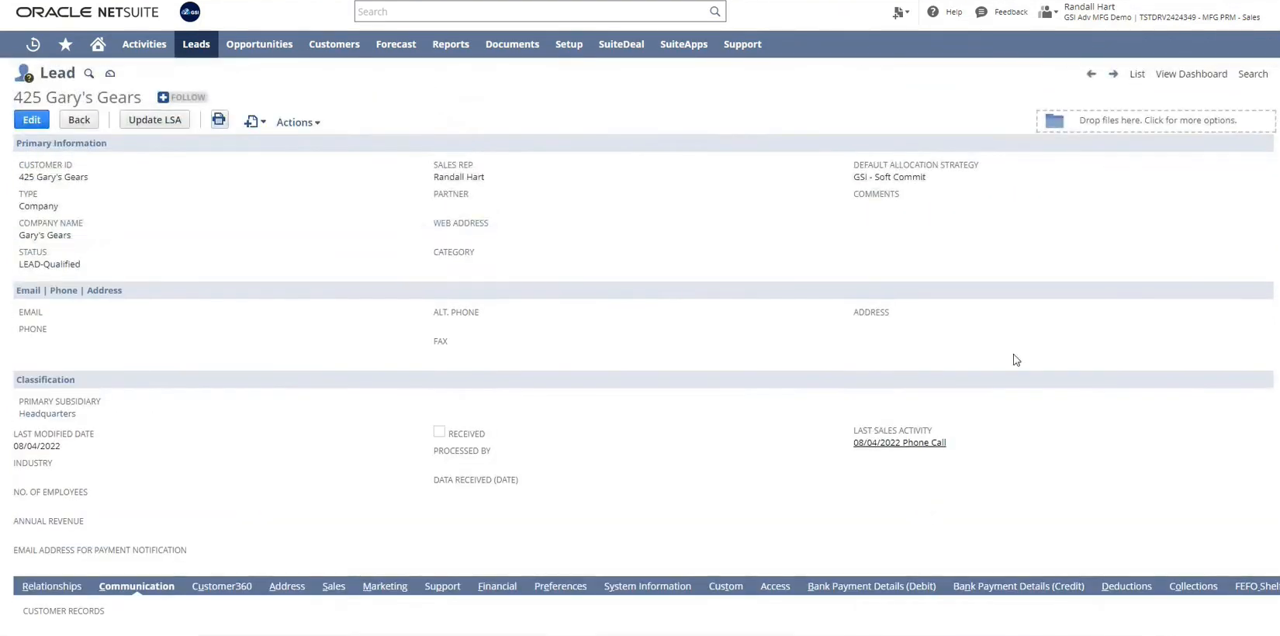
Setting Up Case Management11
Sets up the customer support process, including case types, origin types, assignment rules, territories, and escalation before the support team starts handling cases.
Setting Up Support Checklist · Creating Case Profiles · Assignment Rules & Territories · Setting Case Escalation Rules and Assignments · Using Email Case Capture
Sales Orders and Cash Sales10
Covers creating and managing sales orders and cash sales, including renewals, order guides, and grid-based order entry.
Sales Orders · Sales Order Renewals · Order Guides · Cash Sales · Customer Lifetime Value
Commerce Product Overview4
Introduces NetSuite's commerce products, which link financials, inventory, and order management with merchandising, marketing, and customer service to support consistent B2B and B2C shopping experiences.
Commerce Product Descriptions · Commerce Tab · Commerce Website Types
Working With Cases14
Covers the day-to-day lifecycle of a support case, from creation and routing through reply, escalation, and closure.
Filtering the Cases List · Case Flowchart · Create Cases · Case Summary · Assigning Cases
Capturing Leads6
Provides the tools for generating and organizing new leads, including building online customer forms and tracking where each lead originated. Covers lead source data for both direct list imports and web store visitors.
Lead Sources · Online Customer Forms · Passing Parameters Through URLs · Tracking Lead Sources for Web Store Visitors · Lead Reports and Analysis
Order Fulfillment and Shipping9
Covers fulfilling sales orders and shipping goods to customers, including automation, carrier integration, and inbound shipment tracking.
Order Fulfillment Automation · Order Fulfillment · NetSuite Ship Central · Shipping · Static Route Management
Store Front12
Covers the customer-facing storefront experience, including themes, item display, checkout, search, order history, account management, and on-site marketing.
Getting Started · Themes & Extensions · Web Store Items · Web Store Transactions · Search
NetSuite CPQ Configurator6
Lets sales teams build complex items by picking from an available list of options and features, with real-time validation, dynamic pricing, a visual preview, saved default configurations, and accessory add-ons, plus optional AI-guided assistance and manufacturing work order creation.
Updated Labels for User Interface Elements · NetSuite CPQ Configurator Setup · NetSuite CPQ Configurator Products · Working with Product Building Blocks · Configuring Items From Transactions
Billing and Invoices9
Covers generating customer invoices and bills, including standard billing, subscription billing through SuiteBilling, and electronic invoicing.
Billing · Invoices · SuiteBilling · Fulfillable Items with SuiteBilling · Advanced Billing
Revenue and Expense Recognition11
Manages how NetSuite recognizes revenue and expenses over time, including rule-based treatments, approval workflows, and compliance with standards such as VSOE and EITF 08-01.
Revenue and Expense Recognition Overview · Advanced Revenue Management (Essentials) and (Revenue Allocation) · Revenue Recognition Approval Workflow · Rule-Based Recognition Treatment · Expense Amortization
Issue Management21
Issue Management lets support and quality teams document, categorize, and track product defects, with configurable roles, statuses, severities, and types.
Issue Management Overview · Issue Management Setup Checklist · Getting Started With Issue Management · Setting Issue Management Preferences · Setting Up Issue Statuses
Managing Campaigns13
Covers the day-to-day work of running a campaign record: building checklists, assigning categories, scheduling events, defining target groups, and linking customers or transactions to a campaign. Also includes the campaign calendar and performance metrics.
Campaign Checklist · Campaign Categories · Creating a Campaign Record · Campaign Events · Creating Target Groups for Campaigns
Payment Processing7
Payment Processing covers capturing and disbursing customer payments securely, including tokenized Payment Instruments that reduce PCI compliance scope.
Payment Instruments · Payment Processing Options · Deduction and Chargeback Management · Rebates and Trade Promotions · Customer Payments
Knowledge Base8
Knowledge Base organizes support content into searchable topics and solutions, helping customers self-serve and reps close cases faster.
Knowledge Base Setup Checklist · Setting Up a Knowledge Base · Creating Knowledge Base Topics · Creating Knowledge Base Solutions · Publishing a Knowledge Base
Merchandising4
Merchandising gives merchandisers the tools to plan ranges, manage the merchandise hierarchy, run promotions, and configure on-site search to drive sales toward commercial targets.
Merchandise Hierarchy · Promotions · Searchandising
NetSuite CPQ Proposal Generator4
Generates customized quotes and proposals as PDF or Word documents from reusable templates built with HTML and CSS, pulling in dynamic data from configured items and transactions and using rules to include or exclude sections.
NetSuite CPQ Proposal Generator Setup · Creating Document Templates · Creating Documents from Transactions
Email Marketing Campaigns18
Covers building, scheduling, and analyzing email campaigns from HTML templates, including personalized content, DKIM authentication, and scheduled send times. Also includes lead nurturing sequences, newsletters, subscription management, and tracking how recipients respond.
Email Best Practices · Optimizing Email Campaigns · Subscription Management · Campaign Email Domains · Creating a Campaign Email Address Record
SaaS Metric Reporting23
SaaS Metric Reporting tracks subscription-based revenue metrics like recurring revenue, churn, and customer cohorts by analyzing billing schedules and transaction history.
SaaS Metric Reporting Overview · SaaS Metric Reporting Setup Tasks · Creating Items for SaaS Metric Reporting · Impact Subcategory Record for SaaS Metric Reporting · SaaS Metric Tracking
Monitoring Support Performance4
Provides alerts and reports that help support managers track case volume, service levels, and rep performance.
Case Alerts on Support Cases · Performance Metrics for Support Cases · Support Reports
Keyword Campaigns7
Attributes site revenue and inbound leads to the paid search terms bought through services such as Google Ads. Covers naming conventions, bulk creation, importing, and exporting keyword data for submission to search engines.
Creating Keyword Campaigns in Bulk · Importing Keyword Campaigns · Naming Keyword Campaigns · Exporting Keywords · Submitting Your Paid Search Proposal
NetSuite Pay6
NetSuite Pay is an integrated payment processing option that lets businesses accept and reconcile customer payments directly within NetSuite.
NetSuite Pay Overview · NetSuite Pay Setup · Automated Settlement Reconciliation for NetSuite Pay · Using NetSuite Pay · Frequently Asked Questions about NetSuite Pay
SuiteCommerce InStore (SCIS)4
SuiteCommerce InStore (SCIS), a tablet-based, touch-screen point-of-sale application, integrates with retail hardware such as payment terminals and scanning equipment, and scales as a retailer's sales volume grows.
SCIS Administrator Guide · SCIS User Guide · SCIS 2.0 Release Guides
NetSuite CPQ Ecommerce Integration3
Automatically converts standard line items added through SuiteCommerce or other ecommerce platforms into fully configured items within a transaction record, running the conversion in the background via a scheduled script.
Testing and Debugging the Conversion into Configured Items · Converting Transaction Line Items into Configured Items with a Single Scheduled Script Call
Upsell Manager7
Analyzes customer purchase histories to identify items frequently bought together, surfacing upsell opportunities on customer records and sales transactions. Results can feed marketing target lists, sales tasks, or opportunity records for reps to act on.
Using the Upsell Manager Wizard · Upselling From Customer Records · Upselling on Transactions · Upsell Preferences · Limits on Upsell Manager Data
Customer Returns4
Customer Returns covers two linked processes: tracking items customers send back, then crediting or refunding the customer for those returns.
Customer Return Management · Customer Credits and Refunds · Return Authorization from Case
NetSuite CPQ Guided Selling4
Lets sales teams build searchable catalogs of items with advanced filters, so reps can quickly find matching products, offer add-on or premium items, and keep quotes complete with required-item rules.
NetSuite CPQ Guided Selling Setup · Creating Catalogs · Searching for Items from Transactions
Intelligent Recommendations6
Uses AI to calculate items a customer is likely to want, based on similar past purchases, related buying patterns, and comparable item attributes. Sales reps can pull the suggested items directly into a sales order, estimate, or open opportunity, and the same engine can show suggestions to shoppers on a SuiteCommerce storefront.
Account Requirements for Intelligent Item Recommendations · Recommendation Scenarios and Blocklists · Add Recommended Items to Sales Orders, Estimates, and Opportunities · Intelligent Item Recommendations: CRM Conversion Analytics · Manage Intelligent Item Recommendations Preferences
Order Management Reports9
A set of reports covering sales orders, returns, invoicing, shipping, and inventory traceability across the order management cycle.
Sales Order Reports · Return Authorization Reports · Open Invoices Report · Shipping Report · Transaction Detail Report
Customer Surveys5
Builds online customer surveys from a custom record type through to distribution and response analysis. Survey forms can use a standard layout or a custom HTML template, and links sent by email or campaign automatically match each response with the person who submitted it.
Creating a Custom Record Type for a Customer Survey · Building an Online Form for a Customer Survey · Creating the Link to a Customer Survey · Sending Out a Customer Survey
Order Management Workbooks4
Provides analytics workbooks for exploring invoiced sales, ordered sales, and monthly recurring revenue trends.
Sales (Invoiced) Workbook · Sales (Ordered) Workbook · Monthly Recurring Revenue Workbook
Marketing Reports17
Provides a set of standard reports covering campaign ROI, response rates, click-throughs, and lead sources, including sales and leads generated by paid keywords.
Campaign ROI Analysis Summary Report · Campaign ROI Analysis Detail Report · Campaign Response Summary Report · Campaign Response Detail Report · Campaign Clickthrough Summary Report
Setting Up Marketing7
Covers the preparatory setup needed before running marketing campaigns, including authorizing reply email addresses, defining subscription categories customers can opt into, and configuring the reference data used to evaluate campaign performance.
Marketing Preferences · Campaign Audiences · Campaign Verticals · Campaign Search Engines · Campaign Channels
Setting Up SFA15
Walks through the setup tasks for sales force automation: creating sales teams, marking employees as sales reps, defining rules and territories for automatic lead routing, and setting the quotas reps must meet.
Sales Force Automation Preferences · Customer Statuses · Team Selling · Marking an Employee as a Sales Rep · Setting Up a Sales Team
Sales Forecasting14
Gives sales reps and managers a configurable tool for predicting revenue, using tiered probability weighting and dashboard KPIs like total pipeline and new opportunities. Reps can override system-calculated figures with their own judgment through the forecast editor.
Setting Up Sales Forecasting · A Sales Person's Guide to Forecasting · Forecasting Best Practices · Forecasting Preferences · Advanced Forecasting
Opportunities and Estimates7
Gives sales reps a central record, the opportunity, for tracking a potential deal, and the estimate used to quote it, feeding pipeline visibility for managers. Opportunities and estimates are enabled separately and can be reported on individually.
Opportunity Records · Analyzing Opportunities in Your Pipeline · Opportunity Reports · Estimates · Estimates Reports
Record Management11
Covers the customer-facing entity records, such as contacts, customers, leads, and prospects, that store purchase history, support cases, and communication for everyone a company does business with.
Contacts · Customers · Lead Management · Prospect Records · Competitors
Last Sales Activity3
A SuiteApp that surfaces the most recent sales activity and marketing campaign touch recorded against a lead, prospect, customer, or contact.
Setting Up the Last Sales Activity SuiteApp · Using the Last Sales Activity SuiteApp
Sales Reports31
Provides a large set of standard reports covering sales pipeline, activity, and orders broken out by sales rep, customer, and territory, in both summary and detail formats.
Pipeline by Sales Rep Summary Report · Pipeline by Sales Rep Detail Report · Alt. Sales Pipeline by Sales Rep Summary Report · Alt. Sales Pipeline by Sales Rep Detail Report · Pipeline by Status Summary Report
Commissions14
Calculates employee sales commission automatically from closed deals, based on schedules that can use total sales, quota attainment, quantity sold, or profitability. Reps see estimated and actual commission on their dashboard, and multiple schedules can be combined into a single commission plan.
Commission Preferences · Employee Commission Schedules · Employee Commission Plans · Split Commission · Authorizing Employee Commission
Managing Partners7
Manages records for partner companies that refer or resell business without being a customer or vendor themselves. Partners can be linked to promotion codes, assigned commission plans, and, with multi-partner management enabled, more than one partner can be tied to a single customer.
Creating a Partner Record · Setting Up the Multi-Partner Management Feature · The Partner Center Role · The Advanced Partner Center · Assigning the Advanced Partner Center Role
Partner Commissions & Royalties9
Calculates and pays commission or royalties owed to partners automatically, using schedules based on measures like total sales, profitability, or quota attainment. Each partner can be assigned only one active commission plan per date range.
Setting Up a Partner for Commission · Split Partner Commission · Partner Commission Schedules · Partner Commission Plans · Authorizing Partner Commission
Partner Reports7
Provides standard reports on partner activity, sales, and the customers each partner has brought in, in both summary and detail formats.
Partner Activity Summary Report · Partner Activity Detail Report · Sales by Partner Summary Report · Sales by Partner Detail Report · Customers by Partner Summary Report
Other capabilities10
Prepare Configurable Items for NetSuite CPQ AI Assistant · NSPOS Administrator Guide
Inventory Management
strongInventory tracking, stock management, reorder point planning, multi-location management, and inventory valuation across warehouses and locations.
›34 documented capabilities in 4 areas
Inventory Management
strong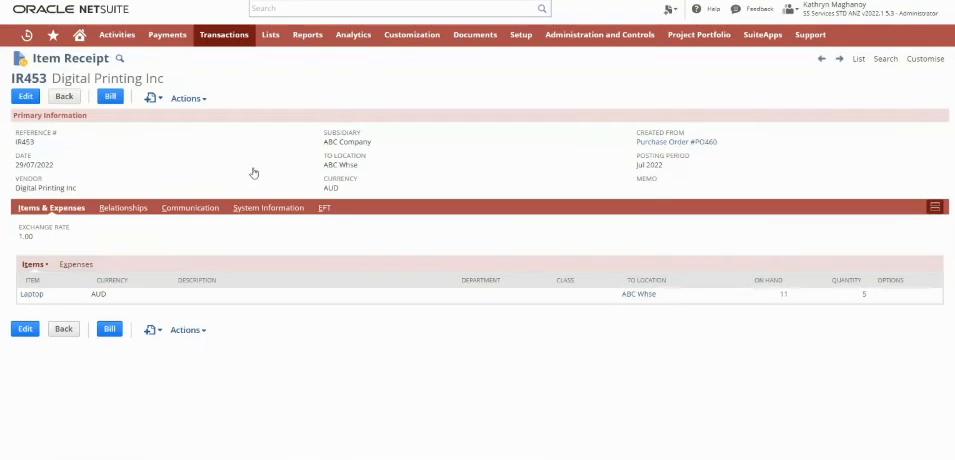
Item Record Management10
Covers how items are defined, priced, costed, and labeled in NetSuite, including support for multiple units of measure and advanced pricing rules.
Using Item Records · Item Pricing · Item Costing · Multiple Units of Measure · Bar Codes and Item Labels
Inventory Management13
Covers stocking, tracking, and reporting on inventory, from basic on-hand quantities to advanced features like consigned stock, quality checks, and mobile counting.
Inventory Management Overview · Inventory Management Setup · Basic Inventory Management · Advanced Inventory Management · Consigned Inventory Management
Warehouse Management7
Covers NetSuite's warehouse management system, including setup, mobile device use, and inbound, internal, and outbound warehouse processes.
NetSuite WMS Overview · NetSuite WMS Setup · Mobile Device Basics for NetSuite WMS · Inbound Processing · Inventory Processing
SCM Mobile4
Covers the SCM Mobile app that lets supply chain staff perform inventory and warehouse tasks from a mobile device.
SCM Mobile Setup · SCM Mobile App Basics · SCM Mobile App Customization
Warehouse Management
strongWarehouse operations including receiving, putaway, picking, packing, shipping, and warehouse layout optimisation.
›29 documented capabilities in 4 areas
Warehouse Management
strongOrder Fulfillment and Shipping9
Covers fulfilling sales orders and shipping goods to customers, including automation, carrier integration, and inbound shipment tracking.
Order Fulfillment Automation · Order Fulfillment · NetSuite Ship Central · Shipping · Static Route Management
Warehouse Management7
Covers NetSuite's warehouse management system, including setup, mobile device use, and inbound, internal, and outbound warehouse processes.
NetSuite WMS Overview · NetSuite WMS Setup · Mobile Device Basics for NetSuite WMS · Inbound Processing · Inventory Processing
SCM Mobile4
Covers the SCM Mobile app that lets supply chain staff perform inventory and warehouse tasks from a mobile device.
SCM Mobile Setup · SCM Mobile App Basics · SCM Mobile App Customization
Shelf-to-Sheet Count9
Counts kit, assembly, and inventory items grouped the way they sit on the shelf, following each item's real-world location and storage area, using a configurable template and count record, then reports how counted quantities and cost differ from what the system expected.
Prerequisites for Using the Shelf-to-Sheet Count SuiteApp · Granting Permissions to R & H Roles · Limitations of the Shelf-to-Sheet Count SuiteApp · Setting Up the Shelf-to-Sheet Template · Setting Up the Shelf-to-Sheet Count Record
Ecommerce
strongIntegrated ecommerce and online storefront capabilities including B2B and B2C portals, product catalogue management, and order management.
›52 documented capabilities in 7 areas
Ecommerce
strongCommerce Product Overview4
Introduces NetSuite's commerce products, which link financials, inventory, and order management with merchandising, marketing, and customer service to support consistent B2B and B2C shopping experiences.
Commerce Product Descriptions · Commerce Tab · Commerce Website Types
Store Front12
Covers the customer-facing storefront experience, including themes, item display, checkout, search, order history, account management, and on-site marketing.
Getting Started · Themes & Extensions · Web Store Items · Web Store Transactions · Search
Site Management Tools13
Covers Site Management Tools, the interface used to build, preview, review, and publish content and categories for a NetSuite commerce web site.
Site Management Tools Overview · Site Management Tools Versions · Site Management Tools Installation and Implementation · Users and Roles in Site Management Tools · Site Management Tools User Interface
Merchandising4
Merchandising gives merchandisers the tools to plan ranges, manage the merchandise hierarchy, run promotions, and configure on-site search to drive sales toward commercial targets.
Merchandise Hierarchy · Promotions · Searchandising
SuiteCommerce Site Builder13
Covers SuiteCommerce Site Builder, an earlier web store platform for configuring site records, layout, hosting, search, SEO, and a scriptable shopping cart.
Site Builder Overview · Site Builder Web Site Record Settings · Setting Up Your Site Builder Site · Site Builder Items, Forms, & Images · Site Builder Tabs & Categories
SuiteCommerce InStore (SCIS)4
SuiteCommerce InStore (SCIS), a tablet-based, touch-screen point-of-sale application, integrates with retail hardware such as payment terminals and scanning equipment, and scales as a retailer's sales volume grows.
SCIS Administrator Guide · SCIS User Guide · SCIS 2.0 Release Guides
NetSuite Point of Sale (NSPOS)2
NetSuite Point of Sale (NSPOS) serves as a workstation-based POS application for retailers, integrating sales, returns, and customer data directly with NetSuite's general ledger and supporting a range of payment hardware.
NSPOS Administrator Guide
Business Intelligence
strongReporting, dashboards, analytics, and data visualisation capabilities built into the ERP platform for operational and strategic decision-making.
›218 documented capabilities in 23 areas
Business Intelligence
strongDashboards7
Covers building and sharing NetSuite dashboards, including key performance indicators, KPI scorecards, report snapshots, and workbook-based portlets.
Dashboards Overview · Key Performance Indicators · KPI Scorecards · Report Snapshots · Workbooks
Workbook8
Covers SuiteAnalytics Workbook, the tool for building custom datasets and workbooks, applying templates, and turning results into dashboard portlets.
SuiteAnalytics Workbook Overview · Analytics Data Source Overview · Custom Workbooks and Datasets · Workbook and Dataset Templates · Workbook-based Portlets
Non-Profit Financial Metrics4
Tracks nonprofit performance through key performance indicators, scorecards, and point-in-time report snapshots.
Social Impact KPIs · Social Impact KPI Scorecards · Social Impact Report Snapshots
Search8
Covers NetSuite's search tools, from global and quick searches to advanced saved searches with custom formulas and bulk mass-update actions.
Search Overview · Global Search · Quick Searches · Simple and Advanced Searches · Saved Searches
Reports5
Covers NetSuite's standard reporting tools, including working with report results, customizing report layouts, and managing saved reports.
Reporting Overview · Working with Report Results · Report Customization · Managing Reports
Connect9
Covers SuiteAnalytics Connect, which lets external BI tools query NetSuite data through ODBC, JDBC, and ADO.NET drivers.
SuiteAnalytics Connect · Connect Drivers · Accessing the Connect Service Using an ODBC Driver · Accessing the Connect Service Using a JDBC Driver · Accessing the Connect Service Using an ADO.NET Data Provider
SaaS Metric Reporting23
SaaS Metric Reporting tracks subscription-based revenue metrics like recurring revenue, churn, and customer cohorts by analyzing billing schedules and transaction history.
SaaS Metric Reporting Overview · SaaS Metric Reporting Setup Tasks · Creating Items for SaaS Metric Reporting · Impact Subcategory Record for SaaS Metric Reporting · SaaS Metric Tracking
NetSuite Analytics Warehouse8
Covers NetSuite Analytics Warehouse, a cloud data warehouse for combining and analyzing data across NetSuite accounts, including setup, single sign-on, and dashboard integration.
What's New in NetSuite Analytics Warehouse · NetSuite Analytics Warehouse Overview · Setting Up NetSuite Analytics Warehouse · NetSuite Analytics Warehouse Basics · Using Single Sign-On with NetSuite Analytics Warehouse
Upsell Manager7
Analyzes customer purchase histories to identify items frequently bought together, surfacing upsell opportunities on customer records and sales transactions. Results can feed marketing target lists, sales tasks, or opportunity records for reps to act on.
Using the Upsell Manager Wizard · Upselling From Customer Records · Upselling on Transactions · Upsell Preferences · Limits on Upsell Manager Data
Country-Specific Reports11
A legacy reporting SuiteApp, no longer enhanced but still supported, that builds custom country-specific financial reports from templates with configurable subtotals, indentation, account lists, and comparative columns.
Country-Specific Reports Overview · Roles and Permissions in Country-Specific Reports · Creating Reports with the Country-Specific Reports SuiteApp · Creating a Template for the Country-Specific Reports SuiteApp · Adding NetSuite Data to the Template File
Intelligent Recommendations6
Uses AI to calculate items a customer is likely to want, based on similar past purchases, related buying patterns, and comparable item attributes. Sales reps can pull the suggested items directly into a sales order, estimate, or open opportunity, and the same engine can show suggestions to shoppers on a SuiteCommerce storefront.
Account Requirements for Intelligent Item Recommendations · Recommendation Scenarios and Blocklists · Add Recommended Items to Sales Orders, Estimates, and Opportunities · Intelligent Item Recommendations: CRM Conversion Analytics · Manage Intelligent Item Recommendations Preferences
Financial Statements5
Covers the standard and custom financial statements NetSuite can generate, from prebuilt reports to a report builder for multi-subsidiary OneWorld accounts.
Financial Statements Overview · Available Financial Statements · Financial Report Builder · OneWorld Financial Statements
Order Management Reports9
A set of reports covering sales orders, returns, invoicing, shipping, and inventory traceability across the order management cycle.
Sales Order Reports · Return Authorization Reports · Open Invoices Report · Shipping Report · Transaction Detail Report
Order Management Workbooks4
Provides analytics workbooks for exploring invoiced sales, ordered sales, and monthly recurring revenue trends.
Sales (Invoiced) Workbook · Sales (Ordered) Workbook · Monthly Recurring Revenue Workbook
Statistical Accounting8
Statistical Accounting tracks non-financial, unit-based measures such as headcount or square footage alongside financial accounts, and lets these statistical accounts drive allocations and reports.
Statistical Accounting Overview · Using Statistical Accounts · Working with Statistical Journal Entries · Auto-Generating Statistical Journal Entries · Working with Allocation Schedules Weighted by the Balance of a Statistical Account
Grant Management SuiteApp8
Gives grant-funded organizations a centralized platform for tracking grants, complete with a KPI dashboard, financial reporting on expenses and net assets, and customizable segments and records; not compatible with accounts already running NFP Financials.
Roles in Grant Management SuiteApp · Grant Management Preferences · Custom Segments and Custom Records for Grant Management · Grant Management Dashboard · Grant Pre-Award Phase
Marketing Reports17
Provides a set of standard reports covering campaign ROI, response rates, click-throughs, and lead sources, including sales and leads generated by paid keywords.
Campaign ROI Analysis Summary Report · Campaign ROI Analysis Detail Report · Campaign Response Summary Report · Campaign Response Detail Report · Campaign Clickthrough Summary Report
Sales Forecasting14
Gives sales reps and managers a configurable tool for predicting revenue, using tiered probability weighting and dashboard KPIs like total pipeline and new opportunities. Reps can override system-calculated figures with their own judgment through the forecast editor.
Setting Up Sales Forecasting · A Sales Person's Guide to Forecasting · Forecasting Best Practices · Forecasting Preferences · Advanced Forecasting
SAF-T Reporting Framework7
Generates Standard Audit File for Tax (SAF-T) reports, letting users choose the accounting context for a given country and label general ledger accounts with the numbers and names the export requires.
SAF-T Reporting Framework Overview · Supported Languages in SAF-T Reporting Framework SuiteApp · Known Limitations of the SAF-T Reporting Framework SuiteApp · Prerequisites for Installing the SAF-T Reporting Framework SuiteApp · Required Setup for Using the SAF-T Reporting Framework SuiteApp
Analytics and Reporting4
Workforce analytics for measuring headcount, hiring, and turnover trends, delivered through prebuilt employee reports, workbooks, and HR dashboard components.
Workforce Analytics · Employee Reports and Workbooks · HR Dashboard Components
Sales Reports31
Provides a large set of standard reports covering sales pipeline, activity, and orders broken out by sales rep, customer, and territory, in both summary and detail formats.
Pipeline by Sales Rep Summary Report · Pipeline by Sales Rep Detail Report · Alt. Sales Pipeline by Sales Rep Summary Report · Alt. Sales Pipeline by Sales Rep Detail Report · Pipeline by Status Summary Report
Partner Reports7
Provides standard reports on partner activity, sales, and the customers each partner has brought in, in both summary and detail formats.
Partner Activity Summary Report · Partner Activity Detail Report · Sales by Partner Summary Report · Sales by Partner Detail Report · Customers by Partner Summary Report
Other capabilities8
NetSuite EPM Connector Installation and Setup · Benchmark 360 · Close Management and Consolidation Sync Installation and Setup
Manufacturing
moderateProduction planning, shop floor control, BOM management, MRP, and manufacturing execution. Supports discrete, process, and mixed-mode manufacturing environments.
›33 documented capabilities in 3 areas
Manufacturing
moderate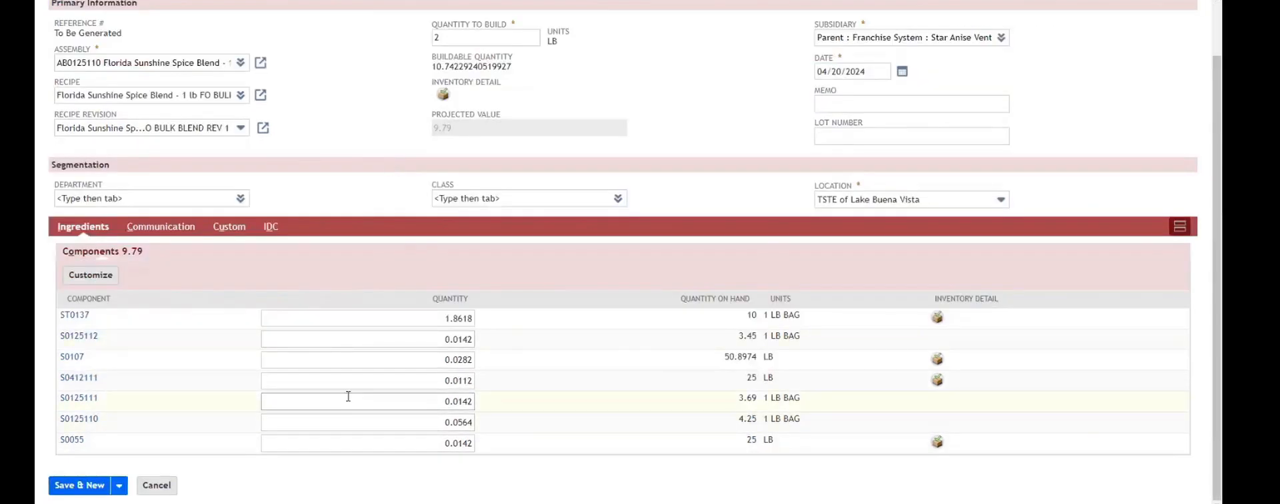
Item Record Management10
Covers how items are defined, priced, costed, and labeled in NetSuite, including support for multiple units of measure and advanced pricing rules.
Using Item Records · Item Pricing · Item Costing · Multiple Units of Measure · Bar Codes and Item Labels
NetSuite CPQ Configurator6
Lets sales teams build complex items by picking from an available list of options and features, with real-time validation, dynamic pricing, a visual preview, saved default configurations, and accessory add-ons, plus optional AI-guided assistance and manufacturing work order creation.
Updated Labels for User Interface Elements · NetSuite CPQ Configurator Setup · NetSuite CPQ Configurator Products · Working with Product Building Blocks · Configuring Items From Transactions
Manufacturing17
Covers production processes in NetSuite, including bills of materials, work orders, routing, scheduling, and mobile tools for shop floor staff.
Manufacturing Overview · Assembly Items · Assembly Work Orders · Supply 360 · Available To Build
HR & Payroll
moderateHuman resources management including employee records, payroll processing, benefits administration, time and attendance, and talent management.
›183 documented capabilities in 24 areas
HR & Payroll
moderateEmployee Information Management14
Central management of employee master records in NetSuite, from initial hire through ongoing updates. Covers individual and CSV-based record creation and editing, system access, supervisor assignment, effective-dated changes, rehires, locations, templates, Social Security numbers, and mailing labels.
Adding an Employee · Adding Employees by Importing a CSV File · Editing Employee Records Using CSV Files · Giving an Employee Access to NetSuite · Assigning a Supervisor to an Employee
Working with NetSuite for Mobile15
Details the day-to-day tasks available in the mobile app, from logging expenses and time to managing calendar events, dashboards, records, approvals, and saved searches.
NetSuite for Mobile Login Options · Changing Roles in NetSuite for Mobile · NetSuite for Mobile Expense Reporting · Expense Reporting Access Levels · NetSuite for Mobile Time Tracking
Effective Dating for Employee Information8
Lets HR back-date or future-date employee record changes so information reflects when it actually became true, with each change tagged to a configurable reason. Effective-dated data flows through to searches, other NetSuite features, workflows, and SuiteScripts.
Using Effective Dating With the Employee Record · Viewing an Employee's Record as of a Date · Editing an Employee's Record as of a Date · Editing Employee Records Using CSV Import for Effective Dating · Managing Employee Change Reasons
Employee Change Requests5
Lets managers submit modification requests for their subordinates' records through the Employee Center, then routes each request through an approval workflow. Once approved, the update is applied automatically to the employee record on the scheduled effective date.
Prerequisites for Employee Change Requests · Employee Change Requests Management · Employee Change Requests in the Employee Center · Employee Change Request Statuses
Employee Directory and Org Browser4
A SuiteApp that lets employees search for coworkers using filters like name, location, department, job title, and (in OneWorld accounts) subsidiary, plus an org browser for viewing reporting lines. Also supports sending Kudos recognition directly from the directory.
Set Up the Employee Directory SuiteApp · Using the Employee Directory · Using the Org Browser
Employee Center Management7
Administers the Employee Center, the self-service role where staff view their own information, submit timesheets, and put in approval requests like time off or purchase orders. Covers access control, portlets, published dashboards, company news, and W-2 downloads.
About the Employee Center Role · Employee Center Portlets · Granting Access to the Employee Center · Employee Center Dashboard Publishing Feature · Working With News Items
Managing Time and Expenses for Project Resources6
Covers how project resources log time and expenses, and how that data is classified to measure utilization and productivity on each project.
Classifying Time for Projects · Entering Time Against Projects · Restricting Time Entry on Project Tasks · Entering Project Expenses · Approving Time and Expenses for Projects
Employee Onboarding and Offboarding Plans5
A SuiteApp providing customizable plans and templates for structuring new-hire onboarding and departure tasks, helping HR run consistent career transitions across the organization.
Onboarding and Offboarding Plans Overview · Setting Up Onboarding and Offboarding Plans · Getting Started With Onboarding and Offboarding Plans · Working With Onboarding and Offboarding Plans
Employee Offboarding5
Handles the record-keeping side of employee departures: processing terminations, categorizing why people leave, and inactivating or removing records once someone exits the company.
Employee Termination · Termination Reason Tracking · Deleting Employee Records · Inactivating Employee Records
Time-Off Management10
Lets HR define time-off plans reflecting company policy and assign them by location, department, class, or OneWorld subsidiary. Employees request leave through self-service, managers or administrators approve it, and balances can flow into SuitePeople U.S. Payroll and dedicated reports.
Time-Off Management Overview · Prerequisites for Using Time-Off Management · Time-Off Management Setup · Time-Off Management Integration With SuitePeople U.S. Payroll · Time-Off Changes
SuitePeople Workforce Management14
Combines shift scheduling, time and attendance capture, and automated wage calculation in one solution. Managers build schedules visually, staff punch in and out using a computer, physical time clock, or the mobile app, and built-in wage rules feed hours into SuitePeople U.S. Payroll.
Workforce Management Terminology · Workforce Management Setup Guide · Configuring Workforce Management · Managing Workforce Management Employees · Managing Workforce Management Shifts
Performance Management3
SuitePeople HR's performance tools keep employees progressing toward career objectives through collaborative goal management, structured performance reviews, and areas-of-focus career planning, plus Kudos for peer recognition.
Goal Management and Performance Reviews · Kudos
Compensation Tracking8
Records each employee's base salary and bonus amounts on a dedicated tab of the employee record, with optional synchronization into SuitePeople U.S. Payroll so pay data is maintained once. Includes bonus lifecycle handling and a workbook summarizing current compensation and bonus history.
Compensation Tracking Setup · Recording Base Pay Compensation for an Employee · Entering a Bonus Target for an Employee · Awarding a Bonus to an Employee · Editing a Bonus
Job Management4
Organizes the workforce around defined jobs with descriptions that can span departments, locations, and subsidiaries, with multiple employees assignable to each. Pairs with Job Requisitions to create recruiting requisitions tied to jobs and track them through hiring.
Job Management and Job Requisitions Prerequisites · Managing Jobs · Job Requisitions
Advanced Employee Permissions17
Fine-grained access control over employee data, splitting the employee record into permission tiers such as self, public, confidential, compensation, access, administration, and full record. Supports custom permissions, fields, sublists, and restrictions so each role sees only appropriate information.
Advanced Employee Permissions Overview · Before Enabling the Advanced Employee Permissions Feature · Advanced Employee Permissions and Standard NetSuite Roles · Employee Self Permission Overview · Employee Public Permission Overview
Labor Expense Allocation8
Allocates payroll costs, such as salary and benefits, to whichever program or functional area an employee actually worked in, using either preset employee rates or logged pay transactions.
Roles and Permissions for Labor Expense Allocation · Setting Up Labor Expense Allocation · Using Labor Expense Allocation with SuitePeople U.S. Payroll · Managing Labor Expense Allocation Periods · Employee Timesheets
Time Tracking4
Captures employee hours for payroll, billing, and project costing, with weekly timesheet entry and administrative tools for managing tracked time.
Managing Time Tracking · Weekly Timesheets · Timesheets
Expense Reports and Purchase Requests4
Employee-initiated spending workflows: staff file cost reimbursement claims and requests to purchase items, and supervisors or designated approvers are notified when items await their sign-off.
Expense Reporting · Giving an Employee Access to Purchase Requests · Notifying a Supervisor or Approver About Required Approvals
Analytics and Reporting4
Workforce analytics for measuring headcount, hiring, and turnover trends, delivered through prebuilt employee reports, workbooks, and HR dashboard components.
Workforce Analytics · Employee Reports and Workbooks · HR Dashboard Components
Compliance6
Features and SuiteApps that help organizations satisfy government and industry requirements, spanning workplace incidents, Affordable Care Act reporting, government ID tracking, benefits, and workforce case handling.
Workplace Incident Tracking · Affordable Care Act (ACA) Reporting · Government-Issued ID Tracking · Benefits Tracking · Workforce Case Interaction
SuitePeople U.S. Payroll5
A full-service U.S. payroll solution that computes earnings, taxes, deductions, and employer contributions from current tax data, handles federal, state, and local filings and payments electronically, and pays employees by direct deposit. Includes W-2, W-2C, 1099-NEC, 940, and 941 forms, service-printed checks, and integrated time, commission, and expense data.
Payroll Setup · Payroll Transactions · Payroll Reports and Workbooks · Frequently Asked Questions: Payroll
Commissions14
Calculates employee sales commission automatically from closed deals, based on schedules that can use total sales, quota attainment, quantity sold, or profitability. Reps see estimated and actual commission on their dashboard, and multiple schedules can be combined into a single commission plan.
Commission Preferences · Employee Commission Schedules · Employee Commission Plans · Split Commission · Authorizing Employee Commission
Setting Up Project 360 Dashboard SuiteApp4
Covers the prerequisites, installation, roles, and portlet setup needed before Project 360 Dashboard SuiteApp is ready to use.
Prerequisites for Project 360 Dashboard SuiteApp · Roles and Permissions for Project 360 Dashboard · Setting Up Project 360 Dashboard Portlets
Other capabilities9
SuitePeople Permission Requirements · Paycheck Journal Feature
Project Management
moderateProject planning, resource allocation, time tracking, expense management, and project accounting for project-centric businesses.
›152 documented capabilities in 18 areas
Project Management
moderateUsing Project Management13
Using Project Management gives teams the full project toolkit beyond Basic Projects, including customer linking, templates, and automatic project creation from service items.
Setting Up Project Management · Specialized User: Project Manager · Project Management Records · Working with Project Management in OneWorld · Creating a Project Record
Project Tasks10
Project tasks break a project down into the individual steps needed to complete it, and every task must connect back to a parent project record.
Creating a Project Task Record · Creating Milestone Tasks · Project Task Attributes Table · Identifying Parent Tasks · Scheduling Project Tasks
Project Task Manager3
The Project Task Manager provides staffing managers a visual, drag-and-drop view of every resource and task so they can spot and fix staffing gaps in real time.
Layout of the Project Task Manager · How to Use the Project Task Manager
Working with Resources in Project Management11
Project resources are the employees or subcontracted vendors assigned to project work, and marking someone as a resource lets NetSuite track their labor cost and availability.
Identifying an Employee as a Project Resource · Identifying a Vendor as a Project Resource · Creating a Project Resource Role · Generic Resources · Creating Resource Groups
Resource Allocations6
Resource Allocations helps resource managers match people to projects by availability and skill set before project managers slot them into individual tasks.
Creating a Resource Allocation Record · Resource Allocation Chart/Grid SuiteApp · Resource Skill Sets · Resource Allocations Custom Approval Workflow · Project Resource Management
Managing Time and Expenses for Project Resources6
Covers how project resources log time and expenses, and how that data is classified to measure utilization and productivity on each project.
Classifying Time for Projects · Entering Time Against Projects · Restricting Time Entry on Project Tasks · Entering Project Expenses · Approving Time and Expenses for Projects
Tracking and Managing Projects10
Provides dashboards, schedules, and baseline tracking so project managers can monitor progress, variance, and planned work throughout a project's lifecycle.
Project Dashboard · The Project Center · Viewing Project Schedules · Working with the Project Schedule · Tracking Project Baselines and Variance
Project Billing10
Project Billing supports multiple billing approaches, including time-and-materials, milestone, and scheduled billing, and only becomes available once both Advanced Billing and Project Management are turned on.
Billing and Project Consolidation · Project Billing Rates · Forecasting Project Billings · Projects and Time and Materials Billing · Projects and Interval Billing
Job Costing and Project Budgeting4
Job Costing and Project Budgeting tie tracked labor time to the general ledger and let teams set and monitor budgets to measure project profitability.
Job Costing · Project Budgeting · Advanced Project Budgeting
Project Management Reports19
A set of reports covering profitability, utilization, budgets, and billing so managers can assess project performance across resources and tasks.
Earned Value by Project Report · Utilization by Resource Reports · Allocated vs. Actual Hours by Resource Report · Utilization by Project Reports · Time Entry Exceptions Report
Purchase to Project9
Purchase to Project SuiteApp gives project managers a unified way to create, track, and control vendor bills and purchase orders tied to specific projects and tasks.
Prerequisites for Purchase to Project · Setting Up the Purchase to Project SuiteApp · Tagging a Vendor as a Project Vendor · Entering Purchase Orders for Projects and Project Tasks · Associating Purchase Orders and Vendor Bills to a Project or Project Task
Project Risk Forecast5
Project Risk Forecast lets project managers rate project health by risk level and helps finance teams quantify the revenue impact of at-risk, charge-based projects.
Prerequisites for Project Risk Forecast · Assigning a Risk Level to Projects · Customizing the Project Entry Form for Project Risk Forecast · Viewing the Project Risk Forecast Report
Invoice Presentation Template8
Invoice Presentation Template SuiteApp lets project-based businesses format invoices in multiple layouts and control how much charge-level detail customers see.
Prerequisites · Roles and Permissions · Supported Languages in Invoice Presentation Template SuiteApp · Setting Up the Invoice Presentation Template Preference · Working with the Invoice Presentation Template SuiteApp
Project Classification7
Project Classification lets organizations tag projects with financial segments like department, class, and location so cost and profit centers roll up accurately in financial reports.
Prerequisites for Installing Project Classification SuiteApp · Roles and Permissions · Transactions in Project Classification SuiteApp · Supported Languages in Project Classification SuiteApp · Project Classification SuiteApp Limitations
Project Cost-to-Cost Percent Complete8
This SuiteApp recognizes project revenue with a cost-driven percentage-of-completion method, calculating how complete a project is from its defined budget and cost figures.
Prerequisites for Installing the Project Cost-to-Cost Percent Complete SuiteApp · Roles and Permissions · Supported Languages in Project Cost-to-Cost Percent Complete SuiteApp · Working with the Project Cost-to-Cost Percent Complete SuiteApp · Project Cost-to-Cost Percent Complete SuiteApp Error Messages
Setting Up Project 360 Dashboard SuiteApp4
Covers the prerequisites, installation, roles, and portlet setup needed before Project 360 Dashboard SuiteApp is ready to use.
Prerequisites for Project 360 Dashboard SuiteApp · Roles and Permissions for Project 360 Dashboard · Setting Up Project 360 Dashboard Portlets
Project 360 Dashboard Pages and Portlets9
Project managers use focus pages and portlets on the Project 360 Dashboard to view task, resource, budget, and finance data across multiple projects at once.
Project 360 Dashboard Preference Page · Common Portlets in Project 360 Dashboard · Project Portfolio · Project Overview · Resource Planning
Other capabilities10
Procurement
moderatePurchase order management, supplier management, requisition workflows, contract management, and spend analytics.
›42 documented capabilities in 6 areas
Procurement
moderate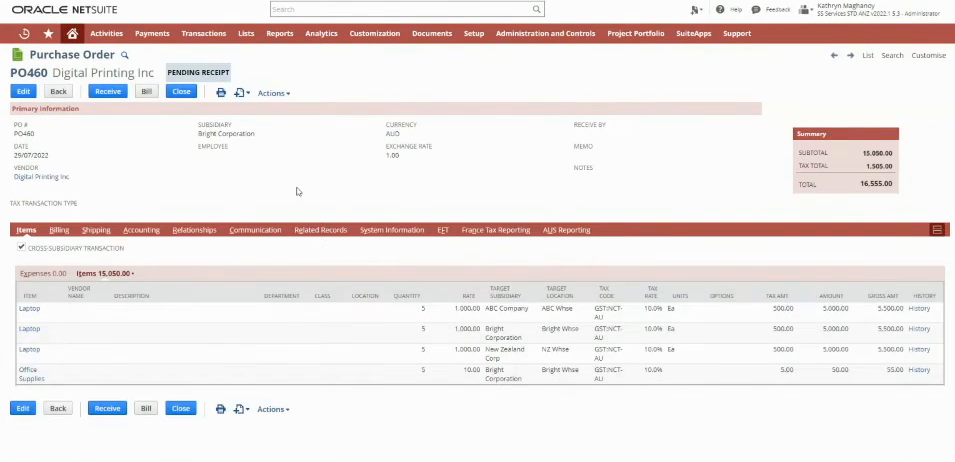
Vendors7
Covers vendor master records and the financial transactions tied to them, including bills, payments, prepayments, returns, and credits.
Vendor Records · Vendor Bills · Vendor Payments · Vendor Prepayments · Vendor Returns
Purchasing and Receiving11
Covers the purchasing cycle from internal requisition through purchase orders, receiving, and procurement reporting.
Requisitions · Purchase Requests · Request for Quote · Purchase Contracts and Blanket Orders · Purchasing
Purchase to Project9
Purchase to Project SuiteApp gives project managers a unified way to create, track, and control vendor bills and purchase orders tied to specific projects and tasks.
Prerequisites for Purchase to Project · Setting Up the Purchase to Project SuiteApp · Tagging a Vendor as a Project Vendor · Entering Purchase Orders for Projects and Project Tasks · Associating Purchase Orders and Vendor Bills to a Project or Project Task
Expense Commitments and Budget Validation5
Lets organizations set budgets by account, segment, and period, then validates incoming POs, requisitions, and vendor bills against those budgets, warning users when a transaction would push spending over the limit.
Roles and Permission for Expense Commitments and Budget Validation · Setting Up Expense Commitments and Budget Validation · Creating a Custom Budget in Expense Commitments and Budget Validation · Using Budget Validation in Transactions
Inbound ASN Automation6
Turns an incoming Advance Ship Notice into a NetSuite inbound shipment record automatically, letting users import ASNs via CSV or web services, set overage tolerance limits, and approve or reject shipments.
Supported Languages in Inbound ASN Automation SuiteApp · Setting Up Inbound ASN Automation · Inbound ASN Automation Best Practices and Limitations · Working with Inbound ASN Automation · Inbound ASN Automation SuiteApp Scripts
Expense Reports and Purchase Requests4
Employee-initiated spending workflows: staff file cost reimbursement claims and requests to purchase items, and supervisors or designated approvers are notified when items await their sign-off.
Expense Reporting · Giving an Employee Access to Purchase Requests · Notifying a Supervisor or Approver About Required Approvals
Asset Management
moderateEnterprise asset management including preventive maintenance, asset lifecycle tracking, work order management, and asset depreciation.
›2 documented capabilities in 1 areas
Asset Management
moderateField Service Operations2
Field Service Operations covers the daily oversight, status updates, and issue resolution that operations managers handle spanning jobs, support cases, tracked assets, and technician performance.
Key FSM Operations Areas
Quality Management
basicQuality control, inspection management, non-conformance tracking, CAPA, and compliance with quality standards (ISO, FDA, AS9100).
Field Service
basicField service management including work order dispatching, technician scheduling, mobile access, parts management, and service contract management.
›124 documented capabilities in 13 areas
Field Service
basicSetting Up Case Management11
Sets up the customer support process, including case types, origin types, assignment rules, territories, and escalation before the support team starts handling cases.
Setting Up Support Checklist · Creating Case Profiles · Assignment Rules & Territories · Setting Case Escalation Rules and Assignments · Using Email Case Capture
Commerce Product Overview4
Introduces NetSuite's commerce products, which link financials, inventory, and order management with merchandising, marketing, and customer service to support consistent B2B and B2C shopping experiences.
Commerce Product Descriptions · Commerce Tab · Commerce Website Types
Working With Cases14
Covers the day-to-day lifecycle of a support case, from creation and routing through reply, escalation, and closure.
Filtering the Cases List · Case Flowchart · Create Cases · Case Summary · Assigning Cases
Store Front12
Covers the customer-facing storefront experience, including themes, item display, checkout, search, order history, account management, and on-site marketing.
Getting Started · Themes & Extensions · Web Store Items · Web Store Transactions · Search
Issue Management21
Issue Management lets support and quality teams document, categorize, and track product defects, with configurable roles, statuses, severities, and types.
Issue Management Overview · Issue Management Setup Checklist · Getting Started With Issue Management · Setting Issue Management Preferences · Setting Up Issue Statuses
Site Management Tools13
Covers Site Management Tools, the interface used to build, preview, review, and publish content and categories for a NetSuite commerce web site.
Site Management Tools Overview · Site Management Tools Versions · Site Management Tools Installation and Implementation · Users and Roles in Site Management Tools · Site Management Tools User Interface
Knowledge Base8
Knowledge Base organizes support content into searchable topics and solutions, helping customers self-serve and reps close cases faster.
Knowledge Base Setup Checklist · Setting Up a Knowledge Base · Creating Knowledge Base Topics · Creating Knowledge Base Solutions · Publishing a Knowledge Base
Field Service Management Schedule Board6
The Schedule Board is a calendar-style, drag-and-drop interface schedulers use to view resources, assign work, and manage technician workloads with map and filtering tools.
Schedule Board Layout · Schedule Board Resources, Tasks, and Filtering · Schedule Board Map · Schedule Board Settings, Scheduling, and Shortcuts · Scheduler User Guide
Monitoring Support Performance4
Provides alerts and reports that help support managers track case volume, service levels, and rep performance.
Case Alerts on Support Cases · Performance Metrics for Support Cases · Support Reports
SuiteCommerce Site Builder13
Covers SuiteCommerce Site Builder, an earlier web store platform for configuring site records, layout, hosting, search, SEO, and a scriptable shopping cart.
Site Builder Overview · Site Builder Web Site Record Settings · Setting Up Your Site Builder Site · Site Builder Items, Forms, & Images · Site Builder Tabs & Categories
Employee Center Management7
Administers the Employee Center, the self-service role where staff view their own information, submit timesheets, and put in approval requests like time off or purchase orders. Covers access control, portlets, published dashboards, company news, and W-2 downloads.
About the Employee Center Role · Employee Center Portlets · Granting Access to the Employee Center · Employee Center Dashboard Publishing Feature · Working With News Items
Field Service Management Mobile6
FSM Mobile lets technicians view job and asset details, capture work in real time, and stay in sync with the office, with screens configured by FSM administrators.
What Technicians Can and Can't Do in FSM Mobile · FSM Mobile Screens and Tabs Overview · FSM Mobile Workflow · Mobile User Guide · Enhanced Technician Notes
Other capabilities5
Key FSM Operations Areas
Ready to move on Oracle NetSuite?
Price it, put it head-to-head with alternatives, or talk to a partner who has implemented it.
Oracle NetSuite add-ons & integrations
Extend Oracle NetSuite with best-of-breed software that integrates with it:
Highlighted product links go straight to the vendor and are affiliate links — we may earn a commission if you sign up. This never affects which products we list or how we rank them.