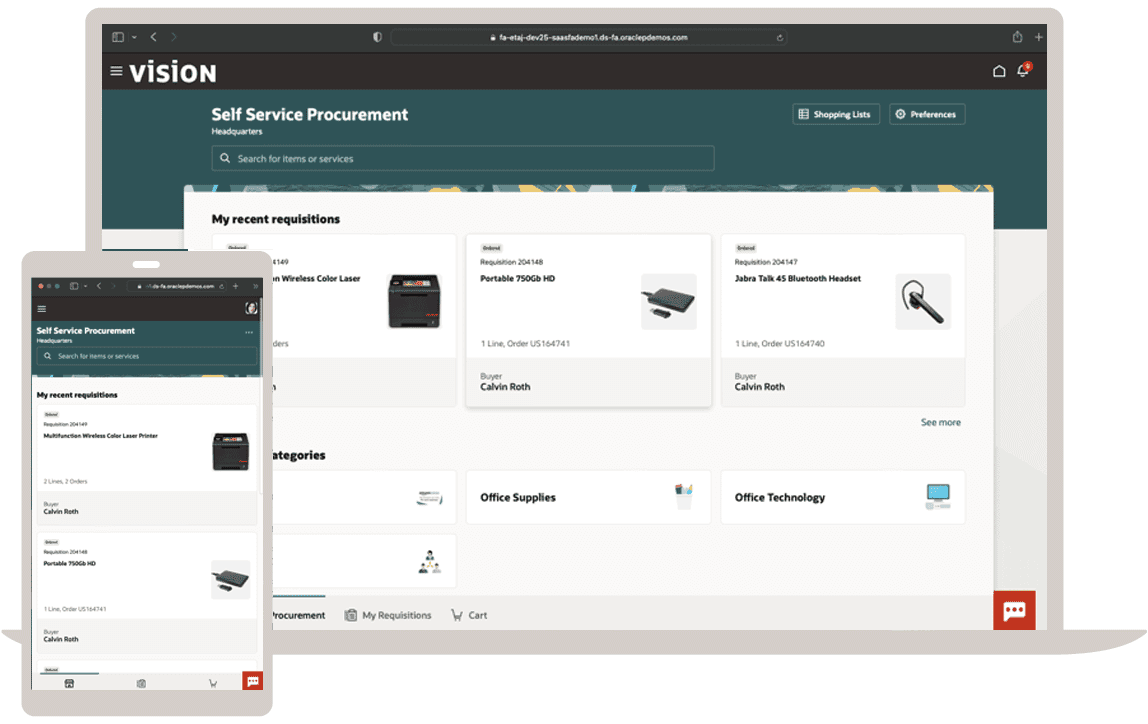
Farming ERP software is a single system that runs the business side of a farm — field-level input costs, crop and produce inventory, payroll, equipment assets and harvest traceability — from planting through to the sale of the crop. That is the line between an ERP and a farm management or precision-agriculture app: tools such as Climate FieldView, Granular and AgriWebb capture agronomic and machine data superbly, but they stop at the field boundary. An ERP adds the general ledger, purchasing, inventory valuation and audit-ready compliance layer those tools lack, turning agronomy records into per-acre profitability, cash-flow forecasts and buyer-ready traceability documents. Row crop, specialty crop and mixed operations use it to allocate seed, fertilizer, chemical, fuel and labor costs to the field, variety and crop year that actually consumed them.
Start your shortlist
8+ ERP systems evaluated for Farming Operations. Compare side by side, estimate cost, find an implementation partner, or download the Top 10 report.
39 ERP vendors evaluated for this guide·Independent — vendors do not pay for ranking or preview it·Reviewed annually with quarterly touch-ups
How we rank these ERPs — our editorial methodology▾
Rankings on this page are editorial, not paid. Vendors do not pay for position, nor do they preview rankings before publication. Every shortlisted system is evaluated on a published 7-pillar framework:
30%Functional depth
20%Total cost of ownership
15%Implementation risk
10%Ecosystem strength
10%Roadmap & AI investment
10%Customer experience
5%Vertical / industry fit
Rankings are reviewed annually with quarterly touch-ups for material changes (new releases, acquisitions, reference drift). Read the full methodology →
Top Farming Operations ERP Picks for 2026
The best farming operations ERP systems in 2026 are SAP S/4HANA Public Cloud, SAP S/4HANA Private Cloud, and Oracle NetSuite.SAP S/4HANA Public Cloud is the strongest fit for mid-market and standardised enterprises wanting fast time-to-value; SAP S/4HANA Private Cloud for large, complex enterprises needing deep customisation and controlled upgrades; and Oracle NetSuite for fast-growing mid-market companies wanting unified cloud ERP. The full ranking below compares 8 systems on pricing, implementation timelines, and farming operations-specific capabilities, drawing on verified deployments from our benchmark dataset.
Best Farming Operations ERP Systems at a Glance
Ranked by farming operations fit — full reviews and the detailed comparison matrix follow below.
SMBs outgrowing QuickBooks, Sage 50 or Xero that are already on Microsoft 365
$80/user/mo
2–6 months
Free 2026 PDF · 30 pages · No paywall
The Top 10 Farming Operations ERP Systems, Ranked
Our editorial 2026 ranking with scoring breakdowns, pricing benchmarks, RFP checklists, and the questions to ask each vendor in your demo — pulled together specifically for farming operations buyers.
The 10 ranked ERP systems for farming operations, with editorial verdicts
Scoring across 7 weighted pillars — what's strong, what's a stretch
Pricing benchmarks, implementation timelines, and TCO ranges
Industry-fit notes: where each vendor wins for farming operations, and where it doesn't
Demo questions and reference-call prompts you can lift directly
Inside this report
1SAP S/4HANA Public Cloud— Mid-market and standardised enterprises wanting fast time-to-value
2SAP S/4HANA Private Cloud— Large, complex enterprises needing deep customisation and controlled upgrades
4Oracle ERP Cloud— Large enterprises moving from on-premise Oracle to cloud
5Microsoft Dynamics 365— Mid-to-large companies in the Microsoft ecosystem
6Sage X3— Midsize process manufacturers and distributors
Free Download
Get the Top 10 Farming Operations ERP Report
Key Challenges for Farming Operations
1
Allocating planting-to-harvest costs — seed, fertilizer, chemical, fuel, irrigation and custom-application charges — to the right field, variety and crop year for true per-acre profitability
2
Integrating harvest and machine data from yield monitors and GPS-guided equipment without manual re-entry into the ledger
3
Reconciling the agronomy plan against actual input usage when in-season decisions change rates, products or planted acres
4
Managing seasonal labor — H-2A crews, piece-rate harvest pay and hour spikes — that breaks standard payroll and job-costing setups
5
Measuring equipment utilization and true cost per acre across owned, leased and custom-hired machinery inside narrow planting and harvest windows
6
Forecasting seasonal cash flow against variable commodity prices, input prepayments and weather-driven yield uncertainty
7
Carrying harvest lot identity from field records and load tickets through storage, packing and shipment so buyer and certification audits can be answered from the system
8
Managing multi-entity structures common in farming (operating entity, land-holding entity, equipment leasing) within a single set of books
Tools & Resources
Evaluating ERP for Farming Operations?
Free research, pricing, and shortlisting tools — built for buyers.
Six buying triggers that show up consistently in farming operations ERP selections we've
observed. If two or more apply to your situation, you're past the point
where another year of "we'll fix the spreadsheet" returns less than the
cost of evaluation.
1
Spreadsheet sprawl is breaking
When two or three people in your farming operations operation maintain "the master spreadsheet" — and the version-control fight is now a weekly meeting — the cost of bad data is already higher than the cost of an ERP. The trigger isn't a single broken file; it's the recurring half-day per week each of those people now spends reconciling rather than running the business.
2
Audit or compliance failure (or near-miss)
A failed external audit, a regulator finding, or a customer-driven compliance demand is the single most common farming operations ERP trigger we see. By the time you're answering "show me the chain of custody for this batch / job / patient / transaction" with a screenshot of an Excel filter, the next event is usually a procurement-led ERP scoping exercise.
3
Growth past 50 employees or $20M revenue
Farming Operations companies tend to outgrow QuickBooks / Sage 50 / Xero plus tooling around 50 employees or $20M revenue, where the volume of inter-departmental handoffs starts compounding. You'll know you're there when finance can't close the month inside 10 working days, or when sales orders need to be re-keyed somewhere downstream.
4
Multi-entity, multi-currency, or multi-location complexity
Adding a second legal entity, opening a new location, expanding into a second currency, or going through an acquisition each surface ERP needs that lighter systems can paper over once but not twice. Two entities in two countries with intercompany transactions is roughly the threshold where cobbled-together accounting becomes expensive enough that a real ERP pays back inside 24 months.
5
End-of-life on a legacy system
Vendor-announced end-of-support (Oracle EBS, SAP ECC, Sage 200 on-prem, or any niche farming operations package whose vendor has been acquired and quietly de-prioritised) forces a decision: stay on an unsupported version and accept the security/audit risk, lift-and-shift to the same vendor's cloud edition, or treat the moment as an opportunity to re-platform. The third option usually wins on TCO if you have more than 18 months of runway.
6
M&A — buying or being bought
Acquirers want clean, consolidatable financials and operational data; targets want defensible numbers and reproducible reports. Either side of an M&A conversation, a credible ERP improves the deal — and a fragile one shrinks it. Farming Operations private-equity buyers in particular treat the ERP stack as a dealbreaker check on serious mid-market deals.
The 8 Best ERP Systems for Farming Operations — In Depth
A working buyer's review of each shortlisted vendor: where it earns
its position for farming operations, the trade-offs we'd
press on in a demo, and the customer profile each one fits best.
Independent — vendors don't pay for ranking, nor preview it.
#1
1. SAP S/4HANA Public Cloud — Standardised cloud ERP with quarterly auto-upgrades and low TCO
By SAP SEpremium
Our top pick for farming operations ERP in 2026. SAP S/4HANA Public Cloud is best suited to mid-market and standardised enterprises wanting fast time-to-value, with deployments ranging across mid-market (251-1,000 employees) and upper mid-market (1,001-5,000 employees). Fastest-growing S/4HANA edition — chosen by mid-market enterprises and subsidiaries of Fortune 500 companies — a track record that matters when you're committing to a system that'll run your farming operations operations for the next decade.
Where SAP S/4HANA Public Cloud earns its position for farming operations: its strongest pillar is lowest TCO in the S/4HANA family — no infrastructure or upgrade projects; buyers consistently call out quarterly automatic updates keep you on the latest features; and we rate rapid 3–6 month implementations via Fit-to-Standard as a meaningful competitive edge in this category. On commercial terms, list pricing starts around $180/user/mo, with all-in TCO typically landing in the $150K–$600K range once licensing, implementation, and three years of support are factored in. Implementation runs 3–6 months for a typical mid-complexity scope — the actual number depends almost entirely on data migration scope and how clean your current master data is.
For farming operations buyers specifically, SAP S/4HANA Public Cloud's strongest modules are Finance & Accounting, Procurement, Business Intelligence — and crucially, all three are rated "strong" rather than "good enough", which matters when these are the systems your daily operations actually run on. Around the edges, Manufacturing and Supply Chain sit at "moderate" — workable, but the modules where SAP S/4HANA Public Cloud stops being a clear best-of-breed candidate. The platform is also a credible fit if your roadmap includes professional services, wholesale & distribution, retail adjacencies, where the same vendor's reference base extends.
The honest trade-offs: limited customisation — no custom ABAP; extensibility via BTP only; and not suited for complex manufacturing or engineer-to-order. Neither is a deal-breaker for most farming operations buyers, but both warrant a focused question in your demo agenda — ask the vendor's reference customers, not their solution architects, how they handled each.
Bottom line: SAP S/4HANA Public Cloud is the right shortlist candidate for a farming operations buyer who fits mid-market (251-1,000 employees) and upper mid-market (1,001-5,000 employees), prefers cloud deployment, and weights lowest TCO in the S/4HANA family — no infrastructure or upgrade projects above shiny new features. If you're outside that profile, two or three vendors lower on this list will fit you better — keep reading.
Starting price
$180/user/mo
Typical TCO
$150K–$600K
Implementation
3–6 months
Deployment
Cloud
Company size
251-1000, 1001-5000
Parent company
SAP SE
Strengths
Lowest TCO in the S/4HANA family — no infrastructure or upgrade projects
Quarterly automatic updates keep you on the latest features
Rapid 3–6 month implementations via Fit-to-Standard
2. SAP S/4HANA Private Cloud — Fully customisable managed-cloud ERP for complex enterprises
By SAP SEenterprise
Ranked #2 of 8 for farming operations buyers. SAP S/4HANA Private Cloud is best suited to large, complex enterprises needing deep customisation and controlled upgrades, with deployments ranging across upper mid-market (1,001-5,000 employees) and enterprise (5,000+ employees). Centrepiece of RISE with SAP — chosen by Fortune 500 manufacturers and global enterprises migrating from ECC — a track record that matters when you're committing to a system that'll run your farming operations operations for the next decade.
Where SAP S/4HANA Private Cloud earns its position for farming operations: its strongest pillar is full custom ABAP development — bring existing ECC customisations; buyers consistently call out customer-controlled upgrade schedule (annual/bi-annual); and we rate complete S/4HANA module portfolio including advanced manufacturing & EWM as a meaningful competitive edge in this category. Commercial terms are negotiated; expect TCO in the $500K–$5M+ range across licensing, implementation, and three years of support. Implementation runs 6–18 months for a typical mid-complexity scope — the actual number depends almost entirely on data migration scope and how clean your current master data is.
For farming operations buyers specifically, SAP S/4HANA Private Cloud's strongest modules are Finance & Accounting, Manufacturing, Supply Chain — and crucially, all three are rated "strong" rather than "good enough", which matters when these are the systems your daily operations actually run on. Around the edges, Sales and HR & Payroll sit at "moderate" — workable, but the modules where SAP S/4HANA Private Cloud stops being a clear best-of-breed candidate. The platform is also a credible fit if your roadmap includes manufacturing, oil & gas, pharmaceuticals adjacencies, where the same vendor's reference base extends.
The honest trade-offs: higher TCO than Public Cloud due to dedicated infrastructure; and longer implementations (6–18 months) with migration complexity. Neither is a deal-breaker for most farming operations buyers, but both warrant a focused question in your demo agenda — ask the vendor's reference customers, not their solution architects, how they handled each.
Bottom line: SAP S/4HANA Private Cloud is the right shortlist candidate for a farming operations buyer who fits upper mid-market (1,001-5,000 employees) and enterprise (5,000+ employees), prefers cloud or hybrid deployment, and weights full custom ABAP development — bring existing ECC customisations above shiny new features. If you're outside that profile, two or three vendors lower on this list will fit you better — keep reading.
Starting price
Custom
Typical TCO
$500K–$5M+
Implementation
6–18 months
Deployment
Cloud, Hybrid
Company size
1001-5000, 5000+
Parent company
SAP SE
Strengths
Full custom ABAP development — bring existing ECC customisations
3. Oracle NetSuite — The original cloud ERP — built for fast-growing companies
By Oraclepremium
Ranked #3 of 8 for farming operations buyers. Oracle NetSuite is best suited to fast-growing mid-market companies wanting unified cloud ERP, with deployments ranging across lower mid-market (51-250 employees), mid-market (251-1,000 employees), and upper mid-market (1,001-5,000 employees). 37,000+ organisations run on NetSuite — the world's #1 cloud ERP — a track record that matters when you're committing to a system that'll run your farming operations operations for the next decade.
Where Oracle NetSuite earns its position for farming operations: its strongest pillar is true multi-tenant cloud — automatic updates, no upgrades; buyers consistently call out excellent for multi-subsidiary and global operations; and we rate strong ecommerce (SuiteCommerce) and CRM integration as a meaningful competitive edge in this category. On commercial terms, list pricing starts around $99/user/mo, with all-in TCO typically landing in the $100K–$500K range once licensing, implementation, and three years of support are factored in. Implementation runs 4–9 months for a typical mid-complexity scope — the actual number depends almost entirely on data migration scope and how clean your current master data is.
For farming operations buyers specifically, Oracle NetSuite's strongest modules are Finance & Accounting, Supply Chain, Sales — and crucially, all three are rated "strong" rather than "good enough", which matters when these are the systems your daily operations actually run on. Around the edges, Manufacturing and HR & Payroll sit at "moderate" — workable, but the modules where Oracle NetSuite stops being a clear best-of-breed candidate. The platform is also a credible fit if your roadmap includes software / saas, wholesale & distribution, ecommerce adjacencies, where the same vendor's reference base extends.
The honest trade-offs: pricing can escalate quickly with add-on modules; and reporting has a learning curve (saved searches). Neither is a deal-breaker for most farming operations buyers, but both warrant a focused question in your demo agenda — ask the vendor's reference customers, not their solution architects, how they handled each.
Bottom line: Oracle NetSuite is the right shortlist candidate for a farming operations buyer who fits lower mid-market (51-250 employees), mid-market (251-1,000 employees), and upper mid-market (1,001-5,000 employees), prefers cloud deployment, and weights true multi-tenant cloud — automatic updates, no upgrades above shiny new features. If you're outside that profile, two or three vendors lower on this list will fit you better — keep reading.
Starting price
$99/user/mo
Typical TCO
$100K–$500K
Implementation
4–9 months
Deployment
Cloud
Company size
51-250, 251-1000, 1001-5000
Parent company
Oracle
Strengths
True multi-tenant cloud — automatic updates, no upgrades
Excellent for multi-subsidiary and global operations
Strong ecommerce (SuiteCommerce) and CRM integration
Highly customisable via SuiteScript and SuiteFlow
Trade-offs
Pricing can escalate quickly with add-on modules
Reporting has a learning curve (saved searches)
Manufacturing module is lighter than dedicated MRP
Long-term contracts with limited flexibility
Companies running Oracle NetSuite in Farming Operations
4. Oracle ERP Cloud — Enterprise cloud ERP with deep financials and analytics
By Oracleenterprise
Position 4 of 8 on this list. Oracle ERP Cloud is best suited to large enterprises moving from on-premise Oracle to cloud, with deployments ranging across upper mid-market (1,001-5,000 employees) and enterprise (5,000+ employees). Chosen by 30,000+ enterprise customers including FedEx, Dropbox, and BT — a track record that matters when you're committing to a system that'll run your farming operations operations for the next decade.
Where Oracle ERP Cloud earns its position for farming operations: its strongest pillar is best-in-class financial management and reporting; buyers consistently call out excellent procurement and project portfolio management; and we rate quarterly cloud updates with no downtime as a meaningful competitive edge in this category. Commercial terms are negotiated; expect TCO in the $400K–$3M+ range across licensing, implementation, and three years of support. Implementation runs 9–18 months for a typical mid-complexity scope — the actual number depends almost entirely on data migration scope and how clean your current master data is.
For farming operations buyers specifically, Oracle ERP Cloud's strongest modules are Finance & Accounting, Supply Chain, HR & Payroll — and crucially, all three are rated "strong" rather than "good enough", which matters when these are the systems your daily operations actually run on. Around the edges, Manufacturing and Sales sit at "moderate" — workable, but the modules where Oracle ERP Cloud stops being a clear best-of-breed candidate. The platform is also a credible fit if your roadmap includes banking & financial services, healthcare, government adjacencies, where the same vendor's reference base extends.
The honest trade-offs: complex and expensive — not suited for SMBs; and implementation requires specialised Oracle consultants. Neither is a deal-breaker for most farming operations buyers, but both warrant a focused question in your demo agenda — ask the vendor's reference customers, not their solution architects, how they handled each.
Bottom line: Oracle ERP Cloud is the right shortlist candidate for a farming operations buyer who fits upper mid-market (1,001-5,000 employees) and enterprise (5,000+ employees), prefers cloud deployment, and weights best-in-class financial management and reporting above shiny new features. If you're outside that profile, two or three vendors lower on this list will fit you better — keep reading.
Starting price
Custom
Typical TCO
$400K–$3M+
Implementation
9–18 months
Deployment
Cloud
Company size
1001-5000, 5000+
Parent company
Oracle
Strengths
Best-in-class financial management and reporting
Excellent procurement and project portfolio management
5. Microsoft Dynamics 365 — Modular ERP + CRM tightly integrated with Microsoft 365
By Microsoftpremium
Position 5 of 8 on this list. Microsoft Dynamics 365 is best suited to mid-to-large companies in the Microsoft ecosystem, with deployments ranging across mid-market (251-1,000 employees), upper mid-market (1,001-5,000 employees), and enterprise (5,000+ employees). Used by 500,000+ companies worldwide — fastest-growing enterprise ERP — a track record that matters when you're committing to a system that'll run your farming operations operations for the next decade.
Where Microsoft Dynamics 365 earns its position for farming operations: its strongest pillar is seamless integration with Microsoft 365, Teams, and Power BI; buyers consistently call out modular — buy only the apps you need (Finance, SCM, Sales, etc.); and we rate strong field service and project operations modules as a meaningful competitive edge in this category. On commercial terms, list pricing starts around $50/user/mo, with all-in TCO typically landing in the $150K–$1M+ range once licensing, implementation, and three years of support are factored in. Implementation runs 6–14 months for a typical mid-complexity scope — the actual number depends almost entirely on data migration scope and how clean your current master data is.
For farming operations buyers specifically, Microsoft Dynamics 365's strongest modules are Finance & Accounting, Manufacturing, Supply Chain — and crucially, all three are rated "strong" rather than "good enough", which matters when these are the systems your daily operations actually run on. Around the edges, Ecommerce and Quality Management sit at "moderate" — workable, but the modules where Microsoft Dynamics 365 stops being a clear best-of-breed candidate. The platform is also a credible fit if your roadmap includes manufacturing, retail, professional services adjacencies, where the same vendor's reference base extends.
The honest trade-offs: per-app licensing can get expensive when stacking modules; and implementation complexity varies widely by partner. Neither is a deal-breaker for most farming operations buyers, but both warrant a focused question in your demo agenda — ask the vendor's reference customers, not their solution architects, how they handled each.
Bottom line: Microsoft Dynamics 365 is the right shortlist candidate for a farming operations buyer who fits mid-market (251-1,000 employees), upper mid-market (1,001-5,000 employees), and enterprise (5,000+ employees), prefers cloud or hybrid deployment, and weights seamless integration with Microsoft 365, Teams, and Power BI above shiny new features. If you're outside that profile, two or three vendors lower on this list will fit you better — keep reading.
Starting price
$50/user/mo
Typical TCO
$150K–$1M+
Implementation
6–14 months
Deployment
Cloud, Hybrid
Company size
251-1000, 1001-5000, 5000+
Parent company
Microsoft
Strengths
Seamless integration with Microsoft 365, Teams, and Power BI
Modular — buy only the apps you need (Finance, SCM, Sales, etc.)
Strong field service and project operations modules
Copilot AI features across all modules
Trade-offs
Per-app licensing can get expensive when stacking modules
Implementation complexity varies widely by partner
Customisation via extensions can become hard to maintain
Some modules (Commerce) still maturing
Companies running Microsoft Dynamics 365 in Farming Operations
6. Sage X3 — Mid-market ERP with strong process manufacturing and finance
By Sage Groupmid-range
Position 6 of 8 on this list. Sage X3 is best suited to midsize process manufacturers and distributors, with deployments ranging across mid-market (251-1,000 employees) and upper mid-market (1,001-5,000 employees). Deployed by 5,000+ mid-market process manufacturers across 70 countries — a track record that matters when you're committing to a system that'll run your farming operations operations for the next decade.
Where Sage X3 earns its position for farming operations: its strongest pillar is excellent for process manufacturing (batch, formula, compliance); buyers consistently call out strong multi-site and multi-legislation support; and we rate good total cost of ownership for the mid-market as a meaningful competitive edge in this category. On commercial terms, list pricing starts around $100/user/mo, with all-in TCO typically landing in the $100K–$400K range once licensing, implementation, and three years of support are factored in. Implementation runs 4–9 months for a typical mid-complexity scope — the actual number depends almost entirely on data migration scope and how clean your current master data is.
For farming operations buyers specifically, Sage X3's strongest modules are Finance & Accounting, Manufacturing, Supply Chain — and crucially, all three are rated "strong" rather than "good enough", which matters when these are the systems your daily operations actually run on. Around the edges, Sales and HR & Payroll sit at "moderate" — workable, but the modules where Sage X3 stops being a clear best-of-breed candidate. The platform is also a credible fit if your roadmap includes manufacturing, food & beverage, pharmaceuticals adjacencies, where the same vendor's reference base extends.
The honest trade-offs: cRM is very basic — most integrate Salesforce or HubSpot; and no field service module. Neither is a deal-breaker for most farming operations buyers, but both warrant a focused question in your demo agenda — ask the vendor's reference customers, not their solution architects, how they handled each.
Bottom line: Sage X3 is the right shortlist candidate for a farming operations buyer who fits mid-market (251-1,000 employees) and upper mid-market (1,001-5,000 employees), prefers cloud or on-premise deployment, and weights excellent for process manufacturing (batch, formula, compliance) above shiny new features. If you're outside that profile, two or three vendors lower on this list will fit you better — keep reading.
Starting price
$100/user/mo
Typical TCO
$100K–$400K
Implementation
4–9 months
Deployment
Cloud, On-Premise
Company size
251-1000, 1001-5000
Parent company
Sage Group
Strengths
Excellent for process manufacturing (batch, formula, compliance)
Strong multi-site and multi-legislation support
Good total cost of ownership for the mid-market
Flexible deployment options (cloud or on-prem)
Trade-offs
CRM is very basic — most integrate Salesforce or HubSpot
No field service module
Smaller ecosystem than SAP/Oracle/Microsoft
UI modernisation is ongoing but still behind newer ERPs
7. Infor CloudSuite — Industry-specific cloud ERP suites on AWS
By Infor (Koch Industries)enterprise
Position 7 of 8 on this list. Infor CloudSuite is best suited to large enterprises wanting industry-specific cloud ERP, with deployments ranging across upper mid-market (1,001-5,000 employees) and enterprise (5,000+ employees). 65,000+ customers across industry-specific editions — backed by Koch Industries — a track record that matters when you're committing to a system that'll run your farming operations operations for the next decade.
Where Infor CloudSuite earns its position for farming operations: its strongest pillar is deep industry-specific editions (Industrial, Distribution, Healthcare, etc.); buyers consistently call out runs on AWS with Infor OS platform (Coleman AI, Birst analytics); and we rate strong asset management (EAM) and quality management as a meaningful competitive edge in this category. Commercial terms are negotiated; expect TCO in the $300K–$2M+ range across licensing, implementation, and three years of support. Implementation runs 9–18 months for a typical mid-complexity scope — the actual number depends almost entirely on data migration scope and how clean your current master data is.
For farming operations buyers specifically, Infor CloudSuite's strongest modules are Finance & Accounting, Manufacturing, Supply Chain — and crucially, all three are rated "strong" rather than "good enough", which matters when these are the systems your daily operations actually run on. Around the edges, Sales and Project Management sit at "moderate" — workable, but the modules where Infor CloudSuite stops being a clear best-of-breed candidate. The platform is also a credible fit if your roadmap includes manufacturing, healthcare, hospitality adjacencies, where the same vendor's reference base extends.
The honest trade-offs: complex product portfolio — can be confusing to navigate; and implementation requires experienced Infor-certified partners. Neither is a deal-breaker for most farming operations buyers, but both warrant a focused question in your demo agenda — ask the vendor's reference customers, not their solution architects, how they handled each.
Bottom line: Infor CloudSuite is the right shortlist candidate for a farming operations buyer who fits upper mid-market (1,001-5,000 employees) and enterprise (5,000+ employees), prefers cloud deployment, and weights deep industry-specific editions (Industrial, Distribution, Healthcare, etc.) above shiny new features. If you're outside that profile, two or three vendors lower on this list will fit you better — keep reading.
Starting price
Custom
Typical TCO
$300K–$2M+
Implementation
9–18 months
Deployment
Cloud
Company size
1001-5000, 5000+
Parent company
Infor (Koch Industries)
Strengths
Deep industry-specific editions (Industrial, Distribution, Healthcare, etc.)
Runs on AWS with Infor OS platform (Coleman AI, Birst analytics)
Strong asset management (EAM) and quality management
Less customisation needed due to industry-specific features
Trade-offs
Complex product portfolio — can be confusing to navigate
8. Microsoft Dynamics 365 Business Central — Mid-market ERP tightly integrated with Microsoft 365 and the Power Platform
By Microsoftmid-range
Position 8 of 8 on this list. Microsoft Dynamics 365 Business Central is best suited to sMBs outgrowing QuickBooks, Sage 50 or Xero that are already on Microsoft 365, with deployments ranging across small businesses (1-50 employees), lower mid-market (51-250 employees), and mid-market (251-1,000 employees). Microsoft reports 50,000+ organizations worldwide run Business Central — a track record that matters when you're committing to a system that'll run your farming operations operations for the next decade.
Where Microsoft Dynamics 365 Business Central earns its position for farming operations: its strongest pillar is data flows straight into Outlook, Excel and Teams, with dashboards in Power BI — the reason most Microsoft-standardised SMBs shortlist it; buyers consistently call out a genuine full ERP ledger rather than bookkeeping: GL, AP/AR, bank reconciliation, fixed assets, cash flow and multi-currency in the base licence; and we rate copilot adds AI-assisted data entry, reconciliation and reporting without a separate product as a meaningful competitive edge in this category. On commercial terms, list pricing starts around $80/user/mo, with all-in TCO typically landing in the $75K–$400K (3-year) range once licensing, implementation, and three years of support are factored in. Implementation runs 2–6 months for a typical mid-complexity scope — the actual number depends almost entirely on data migration scope and how clean your current master data is.
For farming operations buyers specifically, Microsoft Dynamics 365 Business Central's strongest modules are Finance & Accounting, Inventory Management, Procurement — and crucially, all three are rated "strong" rather than "good enough", which matters when these are the systems your daily operations actually run on. Around the edges, Manufacturing and Supply Chain sit at "moderate" — workable, but the modules where Microsoft Dynamics 365 Business Central stops being a clear best-of-breed candidate. The platform is also a credible fit if your roadmap includes professional services, wholesale & distribution, manufacturing adjacencies, where the same vendor's reference base extends.
The honest trade-offs: manufacturing and service order management need the Premium licence — $110/user/mo against Essentials' $80, a $30 gap that compounds across a team; and cRM is basic by Microsoft's own licensing description; real sales-force automation means adding Dynamics 365 Sales. Neither is a deal-breaker for most farming operations buyers, but both warrant a focused question in your demo agenda — ask the vendor's reference customers, not their solution architects, how they handled each.
Bottom line: Microsoft Dynamics 365 Business Central is the right shortlist candidate for a farming operations buyer who fits small businesses (1-50 employees), lower mid-market (51-250 employees), and mid-market (251-1,000 employees), prefers cloud or on-premise deployment, and weights data flows straight into Outlook, Excel and Teams, with dashboards in Power BI — the reason most Microsoft-standardised SMBs shortlist it above shiny new features. If you're outside that profile, two or three vendors lower on this list will fit you better — keep reading.
Starting price
$80/user/mo
Typical TCO
$75K–$400K (3-year)
Implementation
2–6 months
Deployment
Cloud, On-Premise
Company size
1-50, 51-250, 251-1000
Parent company
Microsoft
Strengths
Data flows straight into Outlook, Excel and Teams, with dashboards in Power BI — the reason most Microsoft-standardised SMBs shortlist it
A genuine full ERP ledger rather than bookkeeping: GL, AP/AR, bank reconciliation, fixed assets, cash flow and multi-currency in the base licence
Copilot adds AI-assisted data entry, reconciliation and reporting without a separate product
One of the largest implementation-partner networks of any mid-market ERP, so local delivery help is rarely the constraint
Trade-offs
Manufacturing and service order management need the Premium licence — $110/user/mo against Essentials' $80, a $30 gap that compounds across a team
CRM is basic by Microsoft's own licensing description; real sales-force automation means adding Dynamics 365 Sales
Implementation runs $25,000–$150,000+ and ongoing support around 25% of that per year, so licence price alone badly understates cost
Microsoft positions Dynamics 365 Finance & Supply Chain above it — multi-entity enterprise complexity will outgrow Business Central
How to evaluate Farming Operations ERP — a 6-step playbook
The buyer-side disciplines that distinguish farming operations ERP selections that go
well from ones that end in re-implementation. None of these is novel —
all of them are commonly skipped.
1
Anchor on 5 critical processes
Don't start with module ticklists. Start by identifying the five business processes that, if degraded, would actually hurt the company — for most farming operations buyers these are an order-to-cash variant, a procure-to-pay variant, a quote/job/work-order variant specific to farming operations, period close, and one regulatory or compliance workflow. Score every shortlist vendor on those five, not on a 200-row checklist.
2
Build the long-list from data, not vendor recommendations
Start with the 30-40 vendors that genuinely serve farming operations, not just the four your CFO has heard of. Filter by company size fit, deployment model, and whether the vendor has reference customers in your sub-vertical. Long-list 8-12; short-list 3-4 for demos. Most failed selections we see started with a long-list of two.
3
Cost out three scenarios, not one
Build a TCO model with three scenarios per finalist: a "happy path" (vendor's quoted scope, baseline users, standard implementation), a "+25% scope" (the additional modules the project sponsor will inevitably add), and a "+50% time" (because implementation always slips). The vendor that wins on Scenario 1 isn't always the one that survives Scenario 3 — and Scenario 3 is the one you'll actually live in.
4
Demo the edge cases, not the happy path
Vendors will demo their best workflow, not yours. Send each finalist 5-7 specific edge cases ahead of the demo (the farming operations situations where your current system fails, the gnarly compliance scenario, the multi-currency oddity, the high-volume month-end peak) and require them to walk through each in their demo. Vendors who skip your edge cases or substitute their own will skip them in implementation too.
5
Reference customers — but ask the right ones
Every vendor will offer reference calls with their three happiest customers. Ask instead for two reference calls with customers in your size band and sub-vertical, and one with a customer that went through a difficult go-live. The third call is where you learn what the vendor is actually like under stress. If they refuse to provide one, that's information.
6
Negotiate the renewal, not just the deal
Year-one pricing isn't where vendors make money on farming operations ERP — renewals are. Negotiate a renewal cap (CPI + 3% is common; some buyers get CPI + 0% on multi-year commitments) and price-protection on additional users. Without this, the year-three uplift can blow up your TCO model after you're already locked in.
Best Farming Operations ERP for SMBs
Recommended for companies with $10M–$250M revenue and 10–200 employees.
Agvance
mid-range
Purpose-built for agri-retailers and grain elevators, Agvance covers field record-keeping, precision-ag data integration, inventory, and accounting in a single platform built specifically for agricultural businesses.
Best for: Small to mid-size grain and specialty crop farming operations
NetSuite
mid-range
Cloud-native ERP with strong multi-entity financials, inventory management, and a food & beverage module that covers lot traceability and perishable inventory for diversified farm enterprises.
Best for: Diversified farming businesses needing robust financial consolidation
Flexible process-manufacturing ERP with strong agricultural extensions, lot traceability, landed-cost tracking, and multi-currency support for farms with export sales or complex supply chains.
Best for: Mid-size specialty crop and mixed farming operations
Inventory-focused platform that integrates with QuickBooks, providing lot traceability, purchase-order management, and basic manufacturing for small farming and produce operations.
Best for: Small farms already using QuickBooks needing inventory and traceability
ERPAG
budget
Cloud ERP for small agri-businesses offering lot tracking, serial number management, multi-location inventory, and procurement workflows at an accessible price point.
Best for: Very small farming or produce businesses with limited IT resources
Katana
budget
Manufacturing-focused cloud ERP with strong real-time inventory tracking, batch management, and demand-driven procurement suitable for small specialty crop or value-added farming enterprises.
Best for: Small value-added farming businesses with light processing operations
Best Farming Operations ERP for Enterprise
Recommended for companies with $250M+ revenue and complex multi-site operations.
SAP S/4HANA
enterprise
Comprehensive enterprise platform with SAP Agriculture industry capabilities, integration to SAP Precision Agriculture, field-level profitability analysis, and global supply-chain orchestration for large farming enterprises and cooperatives.
Best for: Large farming enterprises, cooperatives, and vertically integrated agri-businesses
Full-suite cloud ERP with advanced financial consolidation, supply-chain management, and analytics for large multi-entity farming businesses with complex ownership and financing structures.
Best for: Large farming corporations with complex multi-entity and multi-country operations
Scalable platform with strong integration to Microsoft Power Platform, IoT Hub for precision-ag device connectivity, and a growing partner ecosystem of agriculture-specific ISV solutions.
Best for: Enterprise farming businesses leveraging the Microsoft technology stack
Industry-specific enterprise ERP covering the full farm-to-fork supply chain, with native support for lot traceability, quality management, and FSMA compliance for large integrated farming and processing operations.
Best for: Vertically integrated farming and processing enterprises
Lot and harvest traceability from planting records through post-harvest packing and shipment
✓
Agrichemical application record-keeping with re-entry interval and pre-harvest interval tracking
✓
Harvest yield forecasting and variance analysis against budget
✓
Seasonal cash-flow planning and commodity price hedging integration
✓
Equipment asset management and maintenance scheduling aligned with field operations calendar
✓
Multi-entity financial consolidation for separate operating, land-holding, and equipment entities
✓
FSMA Produce Safety Rule compliance recordkeeping and audit trail management
✓
Supplier and input management with approved-supplier tracking for organic and GAP certifications
Farming Operations ERP Cost Ranges
SMB
$18,000 – $75,000
5–25 users
Implementation: $15,000 – $60,000
Mid-Market
$75,000 – $300,000
25–100 users
Implementation: $60,000 – $250,000
Enterprise
$300,000 – $2,000,000+
100–500+ users
Implementation: $500,000 – $3,000,000+
Best Farming Operations ERP Software 2026 — Vendor Comparison
6 ERP systems for farming operations compared side by side — pricing, modules, deployment, and implementation timelines. Unlock the full table to read every cell.
Microsoft reports 50,000+ organizations worldwide run Business Central
Implementation Considerations
1
Map field and lot identifier structures before go-live — inconsistent field naming across precision-ag platforms and the ERP is the most common integration failure point
2
Plan for seasonal transaction volume spikes at planting and harvest; ensure the system is live and stable well before peak season
3
Evaluate precision-agriculture platform integration requirements (John Deere Operations Center, Climate FieldView, Trimble Ag) early, as data mapping complexity is frequently underestimated
4
Engage agronomists and farm managers alongside the finance team in requirements gathering to ensure field-operations workflows are correctly captured
5
Define organic or GAP certification recordkeeping requirements upfront; retrofitting compliance workflows post-go-live is significantly more expensive
Frequently Asked Questions
Do I need a specialist agriculture ERP or can a generic ERP handle farming operations?
Generic ERP systems can handle basic accounting and inventory for farms, but they lack native support for field-level cost allocation, precision-agriculture hardware integration, harvest lot traceability, agrichemical record-keeping, and FSMA Produce Safety Rule compliance. The customization cost to add these capabilities to a generic platform typically exceeds the premium for a purpose-built or food & beverage specialist ERP.
How does ERP integrate with John Deere Operations Center or Climate FieldView?
Integration is typically achieved via API connectors that pull field operation records (planting, application, harvest passes) from precision-agriculture platforms into the ERP as cost transactions linked to field and crop records. SAP, Microsoft Dynamics 365, and several niche agriculture platforms have pre-built connectors; others require middleware such as Zapier, MuleSoft, or custom API development.
Can ERP help with commodity price risk management on a farm?
Yes. Some agriculture ERPs include basic forward-contract and hedge-position tracking integrated with commodity pricing feeds. For sophisticated hedging, integration with a commodity trading and risk management (CTRM) platform or the CME Group data feed is often required alongside the ERP. SAP S/4HANA and Oracle ERP Cloud offer the strongest native commodity risk capabilities.
How does lot traceability work for produce under FSMA?
Under FSMA’s Food Safety Modernization Act Produce Safety Rule, farms must maintain records linking each harvested lot to the field it was grown in, the date of harvest, and any post-harvest handling activities. ERP lot traceability links those field records to downstream packing, storage, and shipment transactions, enabling rapid lot-level recalls and audit-ready reports without manual spreadsheet reconciliation.
What is the ROI timeline for a farming ERP?
Most farming businesses see measurable ROI within 12 to 18 months, driven by improved field-level profitability visibility (enabling better crop-mix decisions), reduced input waste from better procurement tracking, faster close cycles, and time savings on compliance recordkeeping. Operations processing FSMA audits manually often recover implementation costs within the first audit cycle alone.
How do I handle multi-entity structures (operating entity, land trust, equipment LLC) in ERP?
ERP systems with multi-entity or intercompany capabilities allow each legal entity to maintain its own chart of accounts, balance sheet, and tax profile while consolidating reporting across all entities. NetSuite, Sage X3, SAP, and Microsoft Dynamics 365 all support multi-entity consolidation. Intercompany lease and equipment-usage charges can be posted automatically through intercompany billing workflows.
Can a small family farm benefit from ERP?
For very small farms (under $2M revenue), a full ERP may be overkill. Farm-specific accounting tools like QuickBooks with Fishbowl for inventory, or a basic farm management information system (FMIS), are often more cost-effective. ERP becomes compelling when a farm reaches multi-entity complexity, begins direct-to-retail or export sales requiring lot traceability, or needs to pass FSMA or retailer food-safety audits.
Which certifications should a farming ERP vendor have?
Look for vendors with SOC 2 Type II certification for data security, FSMA readiness documentation or third-party validation, and ideally experience supporting USDA organic certification recordkeeping, GlobalG.A.P. audits, and retailer food-safety programs (e.g., SQF, BRC, GLOBALG.A.P.). Ask the vendor for customer references who have passed FSMA inspections using the system.
What is a row crop ERP system?
A row crop ERP system is business software that combines accounting, purchasing, inventory, payroll and equipment management with field-level records for crops such as corn, soybeans, wheat and cotton. Unlike a farm management app, it holds the general ledger, so every seed, fertilizer, chemical and fuel purchase posts to both the financial statements and the field, variety and crop year that consumed it — producing per-acre cost and margin from data agronomy already enters.
How does ERP improve profitability on row crop farms?
By making per-acre margin visible while there is still time to act. An ERP allocates inputs, labor, fuel and machinery cost to each field and variety, then sets them against yield and contract prices, so low-return acres, over-applied inputs and unprofitable rented ground surface before the next crop plan is locked. Most growers gain more from tighter input purchasing, better crop-mix decisions and faster grain settlement reconciliation than from headcount savings.
How does an ERP system reduce costs on a corn farm?
On a corn operation savings usually come from four places: buying seed, fertilizer and chemical against one consolidated plan instead of field by field; catching over-application by comparing planned versus actual rates per acre; scheduling equipment maintenance around planting and harvest windows to avoid in-season downtime; and reconciling load tickets, shrink and drying charges against elevator settlements automatically. Each is a cost avoided rather than a price negotiated.
How do I choose row crop ERP software?
Start with what has to be posted daily: field and load-ticket capture, input inventory, custom-application billing and payroll. Then confirm the vendor integrates with the precision-ag platform you already run (John Deere Operations Center, Climate FieldView, Trimble Ag), supports multi-entity books, and produces per-acre cost reports out of the box. Ask for two references farming a comparable crop mix and acreage, and price implementation separately from the software license.
Explore Other Agriculture & Agri-Business ERP Guides